Visar inlägg med etikett Musique. Visa alla inlägg

onsdag, oktober 30, 2019

Les qualités essentielles à un promoteur culturel


Comme promoteur culturel, il est primordial de regarder la culture - dans toutes ses manifestations - comme une des activités humaines les plus essentielles pour la survie et le développement de la société, aux côtés de la nourriture, du logement et des vêtements.

Pourtant, il ne suffit pas de travailler dans la culture pour être un bon promoteur culturel, et il faut que la culture fasse partie intégrante de la vie de celui-ci sous une forme ou une autre, que ce soit dans les sphères de la musique, du cinéma, de la littérature, des arts plastiques, etc.
Parmi les atouts essentiels pour tenir un tel poste, il est donc impératif de posséder une culture générale très étendue.
Bien sûr, il est tout à fait possible de se concentrer sur un unique domaine, comme la danse, la peinture ou le thêâtre p.ex. et d'avoir une maîtrise parfaite de ce sujet mais une connaissance généraliste est préférable dans la mesure où les visiteurs d'un site culturel, touristique ou artistique ont des profils et centres d'intérêts variés. Cela n'empêche bien sûr pas le promoteur d'avoir une connaissance plus approfondie dans un domaine spécifique, mais diversifier ses connaissances reste néanmoins souhaitable.


L'ambition d'un promoteur de culture n'est pas seulement de transmettre sa passion et ses connaissances à autrui sur le lieu où il est en poste mais aussi d'élargir les horizons des visiteurs afin de les aider à découvrir et comprendre l'importance de la culture dans la société, d'un contexte local à des enjeux globaux.

La vision globale qui transperce des frontières locales, régionales et nationales ne doit pas mener la personne à regarder certaines manifestations culturelles de haut en dédaignant certaines expressions de la culture et à priori les classer comme "moins qualitatives" au vu de leur position sur l'échelle culturelle supposée dans une société.

Dans un monde dans lequel la culture, depuis des décennies, est devenue un "divertissement" que l'on devrait simplement consommer, il est vital de souligner que les liens les plus forts et profonds entre les être humains, se créent via une connaissance et une compréhension de "l'autre" par ses expressions socio-culturelles.

Pour réussir à transmettre cette compréhension de la culture, un médiateur culturel doit avoir une personnalité extravertie, se montrer enthousiaste, éloquent et aimer le contact avec le public. En outre, l'animateur culturel devrait maîtriser plusieurs langues, un avantage plus important que jamais.

Si les critères ci-dessus correspondent à votre conception des qualités essentielles chez un promoteur de culture et que vous voulez recruter une telle personne, je suis peut-être la personne que vous cherchez. Pour le savoir, ajoutez-moi à votre réseau sur LinkedIn et envoyez-moi un message pour convenir d'un entretien.

måndag, januari 04, 2010

Evgeny Kissin,Esa-Pekka Salonen and Sibelius


This evening I listened to a concert from the Verbier Music Festival (2007?):
Jean Sibelius symphony n:o 5 with Evgeny Kissin at the piano and Esa-Pekka Salonen conducting the youth orchestra.

This is to some extent a very Beethoven-inspired symphony with great bravura and extraordinary fascinating parts of power combined with other more romantic, sensitive passages.
Kissin is a wonderful pianist combining these both above mentioned qualities when playing this piece of music and I think he performed it extraordinarly well.
He has become a bright and shining star on the 'pianistic heaven' the last fifteen-twenty years though he is still rather young (born in 1971)!

Esa-Pekka Salonen is a conductor who has gained a well deserved reputation within many different repertory fields and for the Swedish audience he is of course well known as having been the chief orchestra leader/director of the Swedish Radio Symphony Orchestra (1985-95).
He is, in Sweden, more regarded as a Swedish rather than as the Finnish conductor he actually is. The Swedes have adopted him.

He conducted the UBS Verbier Festival Orchestra, consisted of young musicians, in a piece of music he must know very well and they sounded very good with a surprisingly mature sound.

One have to underline the fact that this festival in Verbier is founded by a Swede, namely Martin T:son Engstroem (if spelled with an oe or an ö, I do not know). He is an artist agent and he has been involved in many artistic projects. This festival he founded in 1994 and he is still in charge.

The final from Sibelius symphony no 5 with Esa-Pekka Salonen
(not from this concert)


Evgeny Kissin at Verbier Music Festival playing Prokofiev 'Romeo and Juliet'


Prokofiev Romeo and Juliet - Evgeny Kissin -... par medicitv


(Photo Evgeny Kissin copied from: http://operachic.typepad.com/photos/uncategorized/2007/04/21/kissin.jpg)
(Photo Esa-Pekka Salonen copied from:https://www.gramophone.co.uk/classical-music-news/esa-pekka-salonen-to-step-down-from-the-philharmonia)

onsdag, februari 13, 2008

Falstaff for only 1 €

I have written on this subject on the Aurore & Gunnar-blog but this is a recurrent phenomena nowadays I think, namely the tickets to operas at The Royal Opera House costing only 10 Skr, equivalent to 1 €.

This time it's the dress rehearsal of 'Falstaff' by Verdi and earler in December 2007 we watched 'Orphée' by Gluck with tickets at the same price as these ones.

Not a bad idea if the Opera House wants to attract 'new customers'. Hopefully they (the 'newcomers') will come back and find it interesting enough to do so.
This is of course (being a truism) dependant on the skill of the singers, musicians and others working with the performances at The Royal Opera House in Stockholm.

lördag, februari 09, 2008

The Alban Berg quartet exists no more!


Regarded as one of the most famous - and I would say foremost - string quartets, the Alban Berg quartet quit playing after almost forty years. They were constituted as a quartet in 1971.

One of the members - Tomas Kakuska - recently died and the rest of the musicians have found it hard to continue after this.
Some have said that a quartet becomes like a family.

Many musicians say that a string quartet is the most demanding form of playing ensemble music.
It requires both being good musicians as well as good friends.
It's also said - in connection to being an ensemble musician - that before having played together for twenty years, you are regarded as a beginner - a novice.

The Alban Berg-ensemble starts a farewell concert in London this week and they end with a concert in Teatro Colon in Buenos Aires in July.

tisdag, oktober 16, 2007

Drum solos - obsessed?

There are a lot of impressive drum soloists in this blogsection but - besides the older and younger very well known 'legends' - take a look at the third clip below. He's amazing.


The Hives at Liljevalchs

The art museum Liljevalchs in Stockholm was the site for this recording by The Hives, the Swedish rock group. Artists making art in a art museum. Enjoy!

fredag, september 07, 2007

Luciano Pavarotti dead


Most of us now know that the great tenor is dead and this did not come as a surprise if one knew what kind of disease he was suffering from.

I have only heard him live once in my life, in Stockholm, at the Stocholm Globe Arena. It was in 1992 and he sang in a setting-up of Guiseppe Verdi's 'Requiem'.

The Russian conductor, Vladimir Fedoseyev lead the Norwegian Radio Orchestra, Kringkastingsorkestret from Oslo and the World Festival Choir with 1800 singers! 

The other soloists were the magnificent singers Carol Vaness, Shirley Verrett and Franco de Grandis.

I remember being somewhat sceptical towards the acoustic conditons in the Globe Arena but when it came to the soloists, it functioned well. 
The choir however did not always sound well, but not because of them but because of the fact that there where "too many" singers in the choir and this became hard to moderate from an acoustical point of view.

Many critics say that Pavarotti should have ended his singing career earlier. 
This is probably right from an artistic point of view. On the other hand, if people still want to pay money in order to listen to an artist even if he is not at the peak of his career, who can blame him for continuing?
It's true that he reached his peak as a singer many, many years ago. He managed though to keep his voice in good shape even at this fairly high age for a singer. 
It is also hard for an artist to end his career and stop singing publically when - like in this case - his instrument always is within him.

One can always discuss if Pavarotti promoted opera as an art form or only Pavarotti as an artist? I think he managed both.

The problem is that this art form becomes more and more dependant on these world artists. People are eager to see a Pavarotti, Domingo, Carreras, Bartoli, Nilsson, Callas or the like.
But the music, the drama, the passion of opera itself? When the audience after hearing a singer like this - when being at his best - arrive to an opera house with 'ordinary' opera singers, this can create a situation of disappointment.

Sometimes Pavarotti also sang songs together with pop artists (like Queen), songs that wasn't always suitable for his voice. In this case his judgment failed him. And again: He became rich by doing so and this was of course one driving force.

Recommended recordings would be those from the 1960's, 70's, 80's and early 90's.

A great opera artist is dead but still I hold Jussi Björling as the foremost lyrical-dramatical opera tenor of all time!


(Black and white photo of Luciano Pavarotti at The Royal Opera House in London and in the role of Manrico/?/ copied from: http://www.roh.org.uk/people/luciano-pavarotti)
(Pavarotti smiling copied from: https://www.1stdibs.co.uk/art/photography/black-white-photography/jack-mitchell-italian-operatic-tenor-luciano-pavarotti/id-a_3931972/)
(Pavarotti in color, smiling copied from: https://www.learning-history.com/luciano-pavarotti-italian-tenor/)

söndag, augusti 05, 2007

Gunnar Bucht

Svenska:

Gunnar Bucht är en av våra stora svenska tonsättare vilken föddes i Stocksund 5 augusti 1927.
Han studerade musiklära (Fil.lic. 1953) och komposition för Karl-Birger Blomdahl vid Uppsala universitet mellan åren 1947 och 1951. Andra namn som figurerat som hans lärare är Carl Orff, Goffredo Petrassi och kanske den mest betydelsefulle av dem alla, Max Deutsch.

Bucht debuterade som pianist 1949 men kom senare att uteslutande koncentrera sig på komposition.
Han kom från 1963 att bl.a. undervisa i musiklära vid Stockholms universitet och var mellan åren 1975-1985 professor i komposition vid Kungliga Musikhögskolan i Stockholm. Därefter har han innehaft en rad olika viktiga positioner inom svenskt musikliv.
För en verksförteckning se hans hemsida via länken vid hans namn ovan.

English:

Gunnar Bucht is one of our foremost composers during the 1900:s.

He was born the 5th of August 1927 in a suburban residential district called Stocksund.

Between 1947 and 1951 he studied musicology and composition for composer Karl-Birger Blomdahl at Uppsala university. He also had teachers like Carl Orff, Goffredo Petrassi and maybe the most important one for Bucht as a composer, namely Max Deutsch.

Bucht made his debut as a pianist in 1949 but later on concentrated exclusively on composition.
From 1963 he came to teach musicology at Stockholm university and between 1975 and 1985 he was professor in compostion at the Royal College of Music in Stockholm. After this he has held a number of important positions within the official music life in Sweden.
For a closer look at his life and work click at the link connected to his name above.

(Photo Gunnar Bucht copied from: http://www.gunnarbucht.com/index4.jpg)

måndag, mars 12, 2007

The Rake's Progress

Svenska (English below):

Kungliga Operan sätter nu upp 'Rucklarens väg' av Igor Stravinskij .
Uppsättningen har 32 år på nacken och den sattes i denna version och vid det tillfället upp i Glyndebourne vid operahuset där .
Regissören heter John Cox. Scenografin är gjord av en ung David Hockney.
Har i radions Kulturnytt av Per Feltzin erhållit god kritik. Har inte sett den och ej läst andra recensioner.
På Operan sattes 1961 en legendarisk version upp av denna opera. Regin stod Ingmar Bergman för. Den uppsättningen gjordes tio år efter urpremiären på detta operaverk.

The Glyndbourne production
English:

The Royal Opera House in Stockholm is staging the opera 'The Rake's Progress' by Igor Stravinskij.
This production is 32 years old and was first put up at Glyndebourne.
At the Opera in Stockholm it is directed by John Cox and the stage design is made by a young David Hockney.
In the Cultural News in radio the journalist Per Feltzin gave it good reviews. I haven't seen it myself and I haven't read other reviews.

The Opera in Stockholm gave this opera in 1961 in a famous production directed by Ingmar Bergman. That was ten years after the first ever performance.


(Photo Igor Stravinsky copied from: http://img1.loadtr.com/b-404979-Igor_Stravinsky.jpg
(Photo 'The Rake's Progress' taken from the Glyndebourne performance and copied from: http://www.blogger.com/post-edit.g?blogID=24999135&postID=6124241672865584262

tisdag, februari 27, 2007

Parsifal in the Cathedral of Karlstad

Svenska (English below):

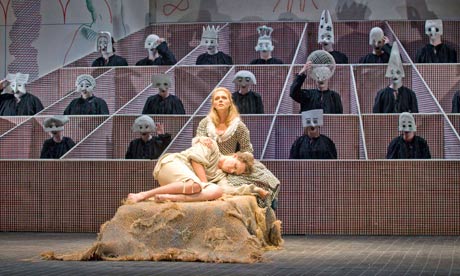
Värmlandsoperan satt upp 'Parsifal' av Richard Wagner i Karlstad domkyrka sistlidna helg och denna uppsättning har fått goda lovord av kritiker.
Man har något lite klankat ned på vissa detaljer i föreställningen men i sin helhet har den uppenbarligen fått nåd hos kritikerna.
Att sätta upp en opera av denna dignitet i en kyrka kan synas både ovanligt och svårt, inte minst akustiskt men radions recensent ansåg att det fungerade utmärkt.

Läs mer via länkarna ovan om musiker, sångare och Wagner.

English:

The Opera of Värmland (local opera company in one of the provinces of Sweden) this weekend staged Richard Wagner's opera 'Parsifal' in the dôme of Karlstad.
The production has been praised by critics though they had some criticism concerning details.
Producing and staging an opera in a big church like this is maybe both unusual and hard, not least acoustically - epecially a opera as well known as this. It obviously worked out well.

Read more through the links.


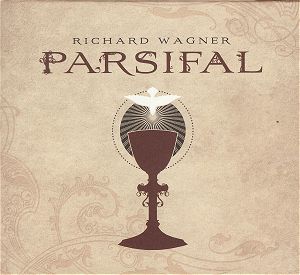
(Photo chalice of Parsifal copied from: http://www.musicweb-international.com/classRev/2008/Oct08/Wagner_parsifal_0184402.jpg)
(Foto föreställningen Marcus Jupither kopierad från: http://www.expressen.se/polopoly_fs/1.570758!defaultImage/3211345952.jpg)
(Foto
AnnLouice Lögdlund kopierad från: http://gfx.aftonbladet-cdn.se/image/10606237/210/normal/f7dbae20d8932/KULTUR-26s04-parsifalFRI-933_438)

tisdag, januari 23, 2007

The Palestinian ensemble 'Maqamat' visit Sweden


Svenska:

Den palestinska ensemblen Maqamat, som består av ungdomar från The Edward Said Conservatory of Music på Västbanken, är på besök i Sverige.
I veckan genomför de konserter och workshops i Göteborg och Oskarshamn.

English:

The Palestinian ensemble Maqamat, consisting of young musicians from The Edward Said Conservatory of Music on the Westbank is visiting Sweden.
This week they are doing concerts and workshops in Gothenburg (Göteborg) and Oskarshamn.

lördag, december 30, 2006

Bernard Haitink, musician of the Year in the USA


Svenska:

Den holländske dirigenten Bernard Haitink fick igår priset som årets musiker av organisationen Musical America.
Trots sina 77 år har han nyligen blivit utsedd till ny chefsdirigent för Chicago Symphony Orchestra.

1968-69 var det Birgit Nilsson - världens genom tiderna främsta dramatiska sopran (min kommentar) - som fick samma pris och ifjol gick priset till den finska sopranen Karita Mattila.

English:

The Dutch conductor Bernard Haitink other day received the price 'Musician of the Year' from the organization Musical America.
In spite of him being 77 years old he was recently appointed Chief Conductor for Chicago Symphony Orchestra.

1968-69 the famous Swedish operasinger Birgit Nilsson the best dramatic soprano in the History of Opera (my comment) - received the same prize and last year it was the Finnish soprano Karita Mattila who was awarded.

French Piano Manufacturer Pleyel is 'cutting down'

This video is added later than the article, from a reportage made in 2008:


Svenska (English below):

Den franska pianotillverkaren Pleyel skär ned på sin tillverkning av pianon och flyglar då man nu gör sig av med merparten av sina 61 anställda.
Pleyel skyller på konkurrens från Kina och billiga pianon vilka tillverkas där och exporteras till hela världen. Dessa håller dock enligt Pleyel en långt lägre kvalitet, enligt Arnaud Marion på Pleyel.

Den svensk-schweiziske pianisten Dag Achatz håller med Arnaud Marion och menar att kinesiska pianon låter som "en bättre kastrull".

Återförsäljare i Sverige håller inte med utan menar att de kinesiska pianona och flyglarna visserligen är billigare och kanske inte kan jämföras med en Steinway & Son-flygel men kanske ej heller skall jämföras med "kastruller".

En flygel av sistnämnda märke kanske kostar 500 000 kr. medan den kinesiska motsvarigheten kostar 100 000 kr.
Kanske får man då räkna med att standarden inte är lika hög.
Dock behöver skillnaden i pris inte med nödvändighet innebära lika stor skillnad i kvalitet.

Det är dock kanske orättvist att jämföra kinesiska pianon och flyglar med ett flyglarnas Rolls Royce som Steinway & Son.

English:

The French piano manufacturer Pleyel is cutting down on their production of pianos and grand pianos. They are going to dismiss almost all of their 61 employees.

They blame it on the cheap pianos imported to Europe and other parts of the World and made in China. The Chinese pianos do not at all have the same standard according to Arnaud Marion of Pleyel.

The Swedish-Swiss pianist Dag Achatz fully agrees and says that the Chinese pianos sounds like "a better saucepan".

Swedish retailers do not agree. The Chinese pianos and grand pianos can perhaps not be compared to the 'giants' like Steinway & Son but the price is also much lower. In Sweden a Steinway & Son costs about 60 000 euros and i Chinese equivalent about 10 000 euros.

Maybe it's unfare to compare the Chinese pianos with the Rolls Royce of pianos and grand pianos at this stage of their development of instruments.

måndag, december 18, 2006

Idomeneo and Deutsche Oper - part 2

Svenska (English below):

Nu skall man sätta upp Mozart's opera 'Idomeneo'Deutsche Oper igen!
Idag, 18 december, är det premiär för den 'avhuggna' operan.

Till föreställningen har jag förstått att ett flertal politiker, kyrkliga ledare, ledare för muslimska församlingar och andra kulturpersonligheter skall anlända. Detta för att manifestera samhörighet kring frågan om konstnärlig frihet och yttrandefrihet
Muhammed's, Buddha's, Jesu's och Poseidon's huvuden har tidigare rapporterats försvunna men finner man dem ej återstår att se om rekvisitören kan återskapa desamma i tid.

Vad gäller bevekelsegrunderna för beslutet att stoppa föreställningen, kan konsateras att om man som enskild trosutövare inte kan förstå skillnaden mellan konstnärliga uttryck och fiktion, kontra verklighet, bör man kanske omvärldera sina idéer?
Till detta hör att om man verkligen tror att 'Gud är större' - och det gäller alla monoteistiska och de flesta polyteistiska religioner - måste det leda till slutsatsen att guden står över denna typ av mänskliga uttryck, oavsett om de är avsedda som kritik mot eller ringaktning av gudomen.
Är det däremot uttryck för ringaktning av tron i sig och trosutövarna som sådana, uppstår problem av mänsklig karaktär som att man känner sig sårad och förhånad vilket kan leda till känslor av ilska, hat och ett intolerant beteende mot människor som inte kan dela den trosuppfattning man själv lever i och av.

Dessa känslor är förståeliga men det behöver inte med nödvändighet leda till handlingar av den sort vi sett prov på i samband med både Muhammedkarikatyrerna (Muhammedbilderna) och uppsättningen av sagda opera.

Att efter att ha sublimerat sina hetaste känslor, låta intellektet ta kontrollen och istället på ett stringent sätt bemöta eller diskutera de uppfattningar om konst och konstnärliga uttryck som leder en operaregissör att ta till metoder som kan uppfattas som kontroversiella, ser jag som en bättre väg att gå.

Till detta kommer att man måste förstå att den som inte delar din tro oavsett om det rör sig om en religiös kosmogoni och trosuppfattningar knutna till denna, en filosofisk eller politisk idétradition, inte heller kan eller kanske bör förstå det tanke- och handlingssätt som är knutet till denna tradition.

Det finns nu exempel på en stor majoritet av, i detta fall muslimer, som hanterat både kontroverserna kring Muhammedkarikatyrerna och denna operauppsättning på ett totalt annorlunda sätt jämfört med den högljudda minoriteten muslimer som gjort sig skyldiga till bränning av flaggor, hot och liknande.

Dessa förstnämnda muslimer har istället inlett dialoger och diskussioner med företrädare för dels Jyllandsposten dels Deutsche Oper är man framfört åsikter kring och förklarat sin syn på dessa uttryck för vad som upplevts som kränkningar av den islamiska tron och dess mest framträdande representant.

Om detta sistnämnda sätt att hantera situationen är långsiktigt bättre kan diskuteras eftersom man då måste ställa sig frågan om vem, vilka eller vad det skulle vara 'bättre' för?

Personligen tror jag trots allt att diskussioner - gärna heta sådana - kring frågor av denna karaktär som så djupt genomsyrar människors liv, på sikt lättare kan leda fram till förståelse för varandras synpunkter och trosuppfattningar.

Våld kanske snabbare ur ett kort perspektiv löser akuta problem?

English:
Now Deutsche Oper once more will (try to) perform Mozart's opera 'Idomeneo' - the 'headless' opera. The première is tonight, the 18th of December.

If I understood it right a great number of politicians, Christian and Muslim leaders are going to attend the opera performance. This in order to demonstrate solidarity concerning the idea of freedom of speech.
The heads of Muhammed, Jesus, Buddha and Poseidon disappeared but the props department hopefully can make new ones in time.

I think it's important that Deutsche Oper took the decision to reopen.

On one hand, I can understand if a religious believer feels him-or herself offended when artistic freedom is expressed in a way that can be seen as offensive. On the other hand, if one truely holds that 'God is greater' - as do all mono- and most polytheistic religions - one have to understand that it is not the god who is offended but the believer who in a strange way - on behalf of God - defends the God not in need of being defended.

When the strong feelings of sadness, anger and hate vanishes, we must let the intellect and reason take advantage over the feelings. Why? Because I feel that it's only by discussing (fiercely if you like) and reasoning with people who do not share your belief system, one can find a common understanding of the point of views of 'the other', more than through riots and offensive action.
This of course requires open minded and non-dogmatic, non-fundamentalistic individuals and they are sometimes hard to find, no matter if we talk about religions or other ideologies.

On the other hand you could in the short run achieve the result you want by trying to intimidate others and forcing them to agree to your demands. Most often only in the short run though.

People who react in the violent way we saw in connection with the Muhammed caricatures and now concerning this performance at Deutsche Oper, are often frustrated people feeling powerless and threatened. It's under many circumstances an understandable feeling but the behaviour following this is unacceptable.