Visar inlägg med etikett authors. Visa alla inlägg

tisdag, augusti 30, 2011

Théophile Gautier 200 years

Français:

L’année 2011 marque le bicentenaire de la naissance de Théophile Gautier.
A cette occasion, une association a été créée, à l’initiative de la Société Théophile Gautier et avec le partenariat des universités de Paris 3, Paris 4 et Montpellier.

Des personnalités du monde artistique, littéraire et muséal, ainsi que des descendants de Théophile Gautier, en font partie. M. Hugues R. Gall, Membre de l’Institut, en est le président d’honneur, Mme Anik Lesure, descendante de Gautier, en est la présidente.

L’association du Bicentenaire de Théophile Gautier 1811-2011 a pour action de susciter et coordonner les initiatives que les universités, les musées et autres institutions organisent en 2011.
English:

The year 2011 marks the bicentenary of the birth of Théophile Gautier.
For this occasion an organisation has been created, on the iniative of 'la Société Théophile Gautier' and with the participation of the universities (Sorbonne Nouvelle) Paris 3, Paris 4 and Montpellier.

Personalities within the artistic-, litterary-, and museum world as well as descendants of Théophile Gautier, participates. Mr Hugues R. Gall, member of the Institute is the honorary president, Mrs Anik Lesure, a descendant of Gautier, is the president.
For those of you not familiar with the works of Théophile Gautier (poet playwright, novelist, journalist, art critic and literary critic), this might be the occasion to get to know him more profoundly, not least as he was a very intresting author, difficult to classify and also a man with an interesting curriculum vitae in general. He was born the 30th of August 1811 and died the 23rd of October 1872.


Le conseil général présente "Théophile Gautier dans son cadre" au domaine de Sceaux - kewego
Jusqu'au 9 janvier 2012, les écuries du domaine de Sceaux accueillent "Théophile Gautier dans son cadre". Patrick Devedjian, le président du


(Image of Gautier as a young man copied from: http://poetes.com/gautier/images/gautier.jpg)
(Photo Gautier as a middle aged man copied from: https://blogger.googleusercontent.com/img/b/R29vZ2xl/AVvXsEjyYS4aokaiB-L10Ojlrfmfg4jboyITvhbqT3nos948HN54rizriykmqnUbl6AzG_ae9bEr8xl4b9tHBrcnSEejkvhkqO1HfiR4Y6y2E-U08hTdxB5Jyt7z1df6NhpMipA8TvS-jQ/s1600/Theophile_Gautier.jpg)
(Photo Gautier as an elderly man copied from: http://upload.wikimedia.org/wikipedia/commons/thumb/d/d6/Th%C3%A9ophil_Gautier_1856_Nadar.jpg/250px-Th%C3%A9ophil_Gautier_1856_Nadar.jpg)

lördag, juni 18, 2011

Plus sombre que l'ombre de tes ailes...

...is the title of this book written by the French journalist and nowadays writer Sébastien Acker, having lived and worked in Berry/Le centre for ten years.

He has always been a bibliophile and as young he read around 4-5 books per week.

When working as a journalist he became fascinated by Swedish and Scandinavian literature and specifically the crime fiction ('polar'), beginning with Sjöwall & Wahlöö.

Later on he continued to interest himself in other authors and more or less incidentally he came to write this book with the above name that - with a rough translation - means: "Much somber/darker than the shadow of your wings".

Acker has today (Saturday) visited La Châtre and La Maison de la Presse in order to sign his book. The photo below (published some days later in the newspaper 'La Nouvelle République') shows Acker in the middle - of course - and my wife Aurore to the right, carrying a box of cinnamon buns, something Acker had asked for and through a 'cooperation' between Aurore and me, he was able to enjoy these Swedish delicacies. Part of the deal with the cinnamon buns was that he promised to carry the yellow shirt of the Swedish football team and below you can see that Acker also kept his part of the deal. (The text in French under the photo).
(DÉDICACE. Sébastien Acker était à la Maison de la presse, samedi matin, pour dédicacer son premier ouvrage Plus sombre que l'ombre de tes ailes aux éditions La Bouinotte. Sébastien avait tenu son pari en revêtant le maillot de foot de l'équipe suédoise ; Aurore, une Castraise, mariée à un Suédois, venue faire dédicacer son livre, avait apporté des kanelbullars, brioches suédoises à la cannelle.)

The events in the book take place both in Berry/Le Centre and Stockholm wherefore Aurore contacted Acker through Facebook, in order to talk about Swedish and Scandinavian literature and parenthetically the links between me and the implicit main character in the book - not mentioned by name - Stieg Larsson, among other things.

The book circles around Léonard, a Parisian postman (always ringing twice?) who is a huge fan of Scandinavian crime novels but also a (very) private investigator, working for noone and nothing.
When having finished the reading of a world famous Swedish crime novel (guess which one), he becomes convinced of one thing:
To him it's clear that the author of this crime novel, dying before he get to see the success of his books, as a journalist threatened by the extreme right wing groups in Sweden, was murdered!
Léonard plonges into this certitude. How can it be that everyone believes that the author of this blockbuster actually died from a heart attack?
Our postman starts his first own major private investigation, flanked by Léon a disabled colleague.
To the Stockholm of Mysteries from Berry, the two men experience a surprising adventure, taking them from places like The Old Town in Stockholm to the province of George Sand, from The Blue Tower in Stockholm, where August Strindberg lived to Sainte-Sévère and Jacques Tati's 'Jour de Fête'.

Below an interview in French by Bip tv, (Berry Issoudun Première Télévision), where Acker explains a little about himself, his passion for Scandinavia and his own book.


Sebastien ACKER

(Photo Acker and Aurore at La Maison de La Press in La Châtre copied from: http://www.lanouvellerepublique.fr/indre/LOISIRS/Livres-cd-dvd/D-233-clic19)

fredag, januari 28, 2011

Helena Henschen dead

måndag, januari 17, 2011

Författaren Sun Axelsson död

torsdag, oktober 28, 2010

Books I've recently read:

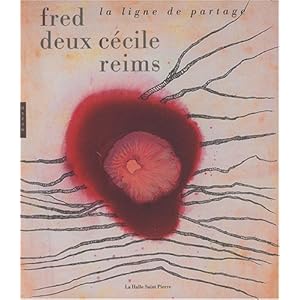
Fred Deux is a local artist, living in La Châtre.
His art reminds somewhat about H.R. Giger but has its own specific style.
I will hopefully write about his art for a journal in Stockholm later on.
This not least as Fred Deux deserves being better known, outside France.


This book gives us an insight into one of the worst mass murderers of all time, Mao Zedong.
We are presented a person, not only hungry for power but also loving to see people suffer,
leaving his own family and others behind, using every single person for his own purposes.
Mao was also a perverted person, loving to see his troups torture, rape and humiliate
both women, men, children and elderly people, just because he saw them as
an obstacle for his ambition to become The Great Leader but also Leader of the World!
To this one can add that he was an incredibly coward person, avoiding all confrontation,
hiding himself behind collaborators and his life guard,
being a highly uncharismatic and deeply evil person.

If the Chinese government has the ambition being regarded seriously
It would be of outmost importance to take a stand against this dictator,
his rule and clear up the history by pointing at the terror of Mao:s regime,
declaring this epoch the greatest failure in the history of China.
Unfortunately it seems as if the next Chinese leader is less liberal,
more conservative and nationalistic but the future will tell.

This also goes for the left wing parties in Europe.
If they would like to be taken serioulsy by others than their own voters,
they should publically race their voice and criticize the Mao-era.
They should also question the current leaders as many of them
have been raised and politically trained during this terrible period in Chinese history.


In times when the 'Green Peril' has displaced the 'Read Peril' when it comes to terror,
I recommend people to read this book (unfortunately only written in Swedish as far as I know).
It takes a broad and deep look into the history of Islam and the Arab origin of this world religion.
We get to follow the islamic influence in the history of Europe and we realize that
without Islam or muslims, Europe actually could have been
even more uncivilized than it today de facto is.
The contributions on every level - literature, music, science - are extensive and important.
Can Islam and muslims be said to share most ideas emerging from the Quran
or is the Holy Scripture interpreted differently depending on who you are,
where you live, your upbringing and historical circumstances?
I would say the latter even if both the fundamentalistic islamists
and the opponents to islam - for different reasons - tries to depict the muslim Umma as united.


This is an interesting book about the history of the Celtic women.
It displays the strong and independent women at the time when
an almost 'matriarchal' society could have been said existing.
We also get to see how men in reality and throught 'myth-making'
tried to diminish the female influence and power
displaying the women as dangerous and the source of evil.
Not much has changed!


This last book is interesting for all of you who think that meritocracy actually exists.
The author on the contrary displays how you reach a level of incompetence,
often the highest level of your career, more or less because of your incompetence
or the fact that you were competent at lower levels in the hierarchy
but not up to the highest post you've reached, as one confound certain competence with others.
This latter is explained with the facta that one can't allow
a competent person running a company or an organization.
I believe we've often noticed this phenomena.

lördag, augusti 18, 2007

Ernst Brunner: Youngster on Gold


The Swedish author Ernst Brunner (unfortunately I could not find any information in English about Ernst Brunner though his books have been translated into other languages) recently had a new book published: 'Youngster on Gold' (my own, literal translation of Yngling på guld).

This is the Swedish title on a painting by Rembrandt van Rijn - a self portrait.
This painting is one of many works by Rembrandt we have been able to see when visiting The National Musuem of Fine Arts in Stockholm.

This book tells the story of how this piece of art and two other famous paintings were stolen from the museum in 2000. The story told in this book is in other words built on facts.

Three armed robbers ran in to the musuem a couple of days before Christmas that year, stole this painting and two paintings by Auguste Renoir.
They fled in a boat and they also used different kinds of methods to delay the police when the latter in turn started pursuing the thiefs.
It took the police a couple of months to detect and apprehend the perpetrators.
It would last five years before the painting by Rembrandt was found and brought back to the museum.
Brunner also tells the story of the persons behind this coup, some quite young men from the suburbs of Stockholm.

Brunner has earlier written historic novels using some fictional ideas of his own.
The two latest books by Brunner is one about the Swedish 18th Century poet Bellman ('Fukta din aska') and one about king Karl XII ('Carolus Rex').
Ernst Brunner in his library(?)


(Photo 'Yngling på guld' copied from: https://www.albertbonniersforlag.se/bocker/158281/yngling-pa-guld/)
(Photo Ernst Brunner in a/his library copied from: http://www.ullamontan.com/en/portraits_sw_authors/brunner_ernst//)

torsdag, april 12, 2007

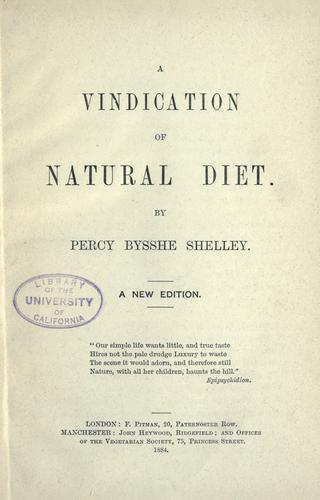
A Vindication on Natural Diet and On the Vegetable System of Diet by Percy Bysshe Shelley


Svenska (English below):

Har nyligen läst en eller snarare två essäer skrivna av Percy Bysshe Shelley vilka utgör kraftfulla inlägg till förmån för vegetarisk kontra animalisk föda;
'Den naturliga näringen' som den övergripande titeln har kommit att bli på svenska.

Detta verk är indelat i två delar, nämligen 'Försvar för en naturlig diet' samt 'Om den växtbaserade dieten'.

I dessa två texter argumenterar Shelley synnerligen vältaligt till förmån för att människan borde vända sig bort från animalisk föda och produktion av densamma till vegetarisk.

Här anförs argument som är synnerligen adekvata, stringenta och även idag högaktuella.
Exempelvis tar Shelley upp frågor kring framställningssättet med användande av naturresurser - inte minst vatten och foder - på ett slösaktigt och skadligt sätt, djurens lidande, den moraliska påverkan på människan som varelse utifrån det faktum att vi är beredda att döda och slakta andra levande varelser för att kunna tillgodose vårt behov av näring.
Hur påverkar detta oss i förhållande till annat levande inklusive vår egen art?

Till detta kommer en rad olika argument baserade på vår biologiska konstitution, som exempelvis tarmsystemets och tändernas utformning och hur väl eller illa dessa korresponderar med ätande av kött.

De delar i denna pamflett där Shelley använder sig av osakliga argument är bl.a. de passager i vilka han hänvisar till för den nutida läsaren fullständigt okända män och kvinnor vilka uppnått hög ålder, enligt Shelley, tack vare en vegetarisk diet.

Idag då diskussionens vågor går höga kring frågor om djurhållning, växthuseffekt, vattenbristen i världen etc. utgör denna bok ett intressant och tidigt exempel på tankar som även idag har sin giltighet.

Shelley var förvisso inte den förste att plädera för eller skriva om vegetarianism men man måste nog tillerkänna hans alster ett stort mått av relevans .

För er som redan är vegetarianer alternativt veganer är denna bok ett intressant historiskt dokument som ingalunda tillhör avdelningen arkaiska, daterade, museala föremål.
För dem av er som ännu inte övertygats om vegetarianismens många fördelar framför animaliskt födointag, kan denna bok utgöra ett tankeväckande filosofiskt arbete som kanske kan leda till en omvärdering av synen på vårt födointag.

Läs den!

English:

I have recently read one or rather two essays that constitute a powerful contribution in favour of vegetarian versus animal food:
'A Vindication of Natural Diet' and ´' written by Percy Bysshe Shelley.

In these two texts Shelley extremely eloquent argue in favour of the thought that man should turn away from eating and producing animal foodstuff and instead turn to a vegetarian lifestyle.

He brings forward arguments that are very adequate, stringent and up to this day highly topical.

They arguments concern questions around the production of food using big natural resources - not least water and fodder - in a squanderly and harmful way, the suffering of animals, the moral impact on man as a creature based on the fact that we are prepared to kill and slaughter other living beings in order to satisfy our need for nourishment.

Added to this there are a few arguments in favour of vegetarian food based on our biological constitution; the way our intestines are shaped the shape of our teeth and how well our badly it corresponds with us as 'meat eaters'.
There are some parts in this lampoon where Shelley uses irrelevant arguments, for example where he mention names of people of whom the modern reader never heard and referring to the fact that they have become very old thanks to vegetarian diet.

Today when the problems of how animals are treated by man, the problems of global warming, the lack of water in great parts of the world is heavily debated, this book is a early example of thoughts that are relevant up to this day.

Shelley was by no means the first author or thinker who pleaded for a vegetarian life-style but his little lampoon is well worth reading.

For those of you who are vegetarians, this book is an interesting historical document still being relevant in most parts. For those who are not vegetarians it's an interesting debate book that perhaps could lead someone to reassess the conviction concerning eating meat and if that really is the best way of living from an environmental and health aspect.


(Picture of the book 'A Vindication on Natural Diet' copied from: http://covers.openlibrary.org/b/id/5597042-L.jpg)
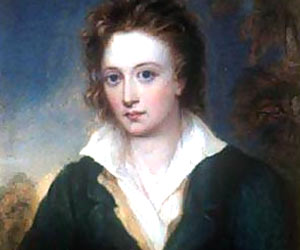
(Image/painting Percy Bysshe Shelley copied from: http://www.thefamouspeople.com/profiles/images/p-b-shelley-1.jpg)

A biography about Majakovskij in Swedish and the first non-Russian?

Svenska:

Författaren Bengt Jangfeldt har skrivit en stor biografi om den ryske författaren Vladimir Majakovskij med titeln 'Med livet som insats - berättelsen om Majakovskij och hans krets'.

Jangfeldt är sedan tidigare en introduktör, översättare och stor kännare av rysk litteratur och har förutom Majakovkskij översatt även Joseph Brodsky.

Den 'krets' som Jangfeldt inviger läsaren i är minst sagt namnkunnig:
Osip och Lili Brik, Majakovskijs egen äktenskapskartell. Roman Jakobson, Viktor Szjklovskij, Kandinskij, Chlebnikov, Lunatjarskij, Alexander Rodtjenko, Boris Pasternak.
Förutom dessa de 'närmaste' vännerna och kollegerna finns lite i utkanten även Meyerhold, Eisenstein, Chagall, Sjostakovitj, Maxim Gorkij.

Har ej läst Jangfeldts bok men den erhöll i radions Kulturnytt god kritik av Göran Sommardal som konstaterade att detta enligt uppgift skall vara den första icke-ryska biografin om Majakonvskij .

English:

The Swedish author Bengt Jangfeldt has written a biography about the great Russian author Vladimir Majakovskij with the title 'With the life at stake - the story about Majakovskij and his circle' (my translation).

Jangfeldt has for many years been an introducer to, translator off and great authority on Russian litterature in Sweden and besides Majakovskij he also have translated works by Joseph Brodsky for example.

The 'circle' mentioned in the title of this book concists of the following persons:
Osip och Lili Brik, Majakovskijs own 'marriage cartel', Roman Jakobson, Viktor Szjklovskij, Kandinskij, Chlebnikov, Lunatjarskij, Alexander Rodtchenko, Boris Pasternak.
Besides these his closest friends and colleagues we also find names like Meyerhold, Eisenstein, Chagall, Sjostakovitj, Maxim Gorky.

I have not read this book but according to one critic in Swedish radio this is supposed to be the first non-Russian biography about Majakovskij.


(Photo at the top Vladimir Majakovskij copied from: http://www.massimobaraldi.it/wp-content/gallery/majakovskij-per-la-voce/majakovskij-02.jpg)

(Photo Bengt Jangfeldt copied from: http://www.hum-vasteras.se/jangfeldt.JPG)
(Photo Majakovskij copied from: http://static.seppukoo.com/6/6/1478227166/1478227166_l.jpg)

Kurt Vonnegut dead


Svenska:

Kurt Vonnegut är död och de flesta av oss kanske mest känner honom som författaren till 'Slakthus 5' som utspelar sig under bombningen av Dresden under andra världskriget och till stora delar är självbiografisk. Denna roman har också filmats.
Förutom detta verk har han skrivit bl.a. 'Sirenerna på Titan'; 'Moder Natt'; 'Vaggan' och 'En man utan land' vilket utgorde hans sista verk.

Hans böcker utgör en relativt brokig blandning av science-fiction liknande litteratur och mer verklighetsnära skildringar vilka många gånger bottnar i självupplevda händelser (vilket kanske kan sägas om alla kostnärliga verk och därför utgör en truism).
Han gisslar samtidsfenomen som han finner osmakliga och har varit en av de starkaste kritikerna av USA och dess politik och samhälle.
Överhuvud är han en stor kritiker av den västerländska livsstilen och inte minst det han upplever som kristenhetens självrättfärdighet och historiskt sett grymma framfart i trons namn.

English:

Kurt Vonnegut is dead and most of us know him for his novel 'Slaughterhouse-Five' where the story is set in Dresden during World War II and this novel is also partly autobiographical. This novel has also been adapted on film.

Besides this novel he also has written 'The Sirens of Titan'; 'Mother Night'; 'Cat's-Cradle' and 'A Man Without a Country' (the last book he wrote before he died).
His books is an unorthodox mixture between science-fiction-like litterature and more 'real-life' accounts that to some extent are built upon his own very personal experiences (as could be said about all artistic expressions and therefore becomes a truism).

He mocked contemporary phenomena that he found repugnant and he has been one of the foremost critics of USA and the political and social development of his native country.
On the whole he was a great critic of the Western lifestyle and not least what he experienced as Christianity's self-righteous and cruel ravages through history and all in the name of faith.

söndag, januari 21, 2007

Parias by Ola Hansson

Svenska (English below):

'Parias' skriven av Ola Hansson är en bok om kriminalitet och dess bakomliggande psykologiska faktorer. Orsaken till ett brott kunde inte utestlutande sökas i en dikotomi mellan 'goda' och 'onda' handlingar alternativt 'goda' eller 'onda' människor enligt Hansson.

Vem var Ola Hansson?
Han föddes 1860 och dog 1925 och ansågs av de flesta som en särling i dåtidens författar-Sverige.
Hans verkförteckning omfattar både prosa, lyrik, essäer och han ägnade sig också åt litteraturkritik.
Han tog sig alltså an flera olika genrer men de svenska litteraturkritikerna och författarna tycktes inte ha uppskattat hans litterära kvaliteter eller var det kanske hans åsikter som utgjorde stötestenen?

Debuten skedde 1884 med 'Dikter' i vilken det kan sägas att han samlat dåtidens 'anda' (om en sådan kan spåras); kärleken, medkänslan, de 'stora' känslorna och d:o tankarna vilken mången konst av skilda slag, försökte ge uttryck för.
'Dikter' verk fick relativt gott mottagande men hans nästa ouevre 'Notturno' rönte inte alls lika stor famgång eftersom han här, i motsats till sitt förstlingsverk, valde en helt annan väg inom litteraturen, åtminstone på den svenska litterära scenen.
I detta verk var han inspirerad av symbolismen och den dekadenta litteraturen. Förebilden var Charles Baudelaire.
Hansson möttes av total brist på försteåelse i sin samtid i vårt land.

'Parias' kom så ut 1890 och innan dess hade Hansson givit ut ett antal verk som till största delen möttes av kritik och oförståelse av den dåtida svenska litterära parnassen.
Ett tidigare verk - 'Sensitiva Amorosa' - hade inte ens funnit någon förläggare i Sverige.

I 'Parias' är det, ur ett freudianskt perspektiv, kriminaliteten och dess bakomliggande psykologiska orsaker som utforskas av Hansson.
Hansson söker finna eller åtminstone noggrannt undersöka gränslinjen mellan vad som anses vara 'normalitet' och 'vansinne' samt om man alltid så enkelt kan sägas kunna klargöra gränsen dessa båda poler emellan.

Författaren fick idéen till boken då han bevittnade en rättegång där en ung kvinna stod inför rätta för ett barnamord hon sades ha begått.
Hansson ansåg att kvinnan handlat omedvetet samt inte varit 'tillräknelig' då hon utfört denna handling, ett resonemang vars konsekvenser borde leda rätten till slutsatsen att hon inte kunde ställas till svars för sina handlingar.

Detta var vid tidpunkten säkert mycket radikala åsikter.
Dåtidens rättsskipning tog inte alltid hänsyn till andra bakomliggande faktorer än de rent uppenbara faktiska omständigheterna kring ett brott.
Sedan många decennier görs i rättsprocesser denna evaluation men i den tid Hansson levde var det knappast legio.

I denna bok kom en av novellerna att bli en skönlitterär version och tolkning av just denna specifika händelse men alla åtta berättelserna i "Paria" innefattar i sig själva olika aspekter på samma tema.

Engelska:

'Parias' is a book written by the Swedish author Ola Hansson born 1860 and dead in 1925.

This book deals with the queston about crime and the psychological factors behind crimes and why people commit them.
The causes of crime can not, according to Hansson, be found in just a dicotomy between 'good' and 'evil' deeds or 'good' or 'evil' people.
He wanted to unveil other factors behind the criminal act.
This was in his time something unusual.

Today the judicial system always or most often take in consideration factors like this but not in the days of Hansson.

Ola Hansson was regarded as an excentric person by his colleagues and litterature critics in those days.
He had great problems in getting the publishing houses to publish his works.
His debut came with the novel 'Dikter' ('Poems') and was relatively well received. Mainly perhaps because it expressed the spirit of the time with subjects as love, compassion, the 'great' emotions and ditto thoughts and this appealed to his contemporaries.
His next work was 'Notturno' but this novel was not received well as he in this piece of work was influenced by symbolism and decadence, something Sweden and it's authors and critics where not prepared for at the time.

'Parias' is inspired by a trial Hansson witnessed.
In this trial a young woman was accused of child murder but he regarded her innocent as she, according to him, had commited this crime in a unconscious state of mind, not responsible for her actons.
He is in this book inspired by Sigmund Freud and his thinking.
The author wanted to investigate the boundaries between 'normality' and 'madness' and prove that this border is very thin.

(Photo Ola Hansson taken from: https://blogger.googleusercontent.com/img/b/R29vZ2xl/AVvXsEiY2ULuH6iJa4qJVaHkpwxLc6e18glJUuzP_KVgyTEZGFjksyECox9MHepk4_Alrd0GyjmMZ_xuLakuzqWo58d0NHc0lZr3Nii81zaQrzpAMxUOK090_X-rsXUp9IcNaVL40j8f0Q/s320/Ola_hansson.png)