Parmi les différents livres que je lis, j'ai commencé avec le troisième roman des "Rougon-Macquart. Histoire naturelle et sociale d'une famille sous le Second Empire". Ma femme me demande si je suis devenu un masochiste ! Après ce troisième roman, il m'en reste 17 !!!!!!!!!!!!!
Visar inlägg med etikett Books. Visa alla inlägg
torsdag, juli 09, 2020
söndag, januari 05, 2020
Honoré de Balzac, Olivier Soutet et Peter Englund
Comme souvent, j'ai plusieurs livres en cours de lecture et l'année dernière, j'ai commencé de relire Honoré de Balzac, car il y avait 220 ans après sa naissance, le 20 mai 1799. 220 ans vous dites ? Ce n'est pas 200 ou 250 ! Non c'est vrai mais ça ne m'empêche pas de relire Balzac.
Les livres lus : Le chef d'oeuvre inconnu (1831) ; La Maison du chat-qui-pelote (1830) ; Le Bal de Sceaux (1830). Je suis en train de lire Petites misères de la vie conjugale (1830).
En même temps j'ai également relu le livre La littérature française de la Renaissance, par le littérateur et linguiste français, Oliver Soutet. J'aime bien revenir à ce livre pour augmenter ma connaissance de la littérature française pendant une période assez intéressante.
Parallèlement je suis aussi en train de lire Den oövervinnerlige ('L'Invincible') (2000) par l'auteur et historien suédois Peter Englund, membre de l'Académie Suédoise qui entre 2009 à 2014, a occupé le poste de secrétaire perpétuel de l'Académie.
Le livre raconte l'histoire ou plutôt les histoires de l'époque où la Suède comptait parmi les grandes puissances européennes, pendant la règne de Karl X Gustav (Charles X Gustave, 1656-1660).
Les livres lus : Le chef d'oeuvre inconnu (1831) ; La Maison du chat-qui-pelote (1830) ; Le Bal de Sceaux (1830). Je suis en train de lire Petites misères de la vie conjugale (1830).
En même temps j'ai également relu le livre La littérature française de la Renaissance, par le littérateur et linguiste français, Oliver Soutet. J'aime bien revenir à ce livre pour augmenter ma connaissance de la littérature française pendant une période assez intéressante.
Parallèlement je suis aussi en train de lire Den oövervinnerlige ('L'Invincible') (2000) par l'auteur et historien suédois Peter Englund, membre de l'Académie Suédoise qui entre 2009 à 2014, a occupé le poste de secrétaire perpétuel de l'Académie.
Le livre raconte l'histoire ou plutôt les histoires de l'époque où la Suède comptait parmi les grandes puissances européennes, pendant la règne de Karl X Gustav (Charles X Gustave, 1656-1660).
tisdag, augusti 30, 2011
Théophile Gautier 200 years
Français:
L’année 2011 marque le bicentenaire de la naissance de Théophile Gautier.
A cette occasion, une association a été créée, à l’initiative de la Société Théophile Gautier et avec le partenariat des universités de Paris 3, Paris 4 et Montpellier.
Des personnalités du monde artistique, littéraire et muséal, ainsi que des descendants de Théophile Gautier, en font partie. M. Hugues R. Gall, Membre de l’Institut, en est le président d’honneur, Mme Anik Lesure, descendante de Gautier, en est la présidente.
L’association du Bicentenaire de Théophile Gautier 1811-2011 a pour action de susciter et coordonner les initiatives que les universités, les musées et autres institutions organisent en 2011.
Des personnalités du monde artistique, littéraire et muséal, ainsi que des descendants de Théophile Gautier, en font partie. M. Hugues R. Gall, Membre de l’Institut, en est le président d’honneur, Mme Anik Lesure, descendante de Gautier, en est la présidente.
L’association du Bicentenaire de Théophile Gautier 1811-2011 a pour action de susciter et coordonner les initiatives que les universités, les musées et autres institutions organisent en 2011.
English:
For this occasion an organisation has been created, on the iniative of 'la Société Théophile Gautier' and with the participation of the universities (Sorbonne Nouvelle) Paris 3, Paris 4 and Montpellier.
Personalities within the artistic-, litterary-, and museum world as well as descendants of Théophile Gautier, participates. Mr Hugues R. Gall, member of the Institute is the honorary president, Mrs Anik Lesure, a descendant of Gautier, is the president.
For those of you not familiar with the works of Théophile Gautier (poet playwright, novelist, journalist, art critic and literary critic), this might be the occasion to get to know him more profoundly, not least as he was a very intresting author, difficult to classify and also a man with an interesting curriculum vitae in general. He was born the 30th of August 1811 and died the 23rd of October 1872.
Le conseil général présente "Théophile Gautier dans son cadre" au domaine de Sceaux - kewego
Jusqu'au 9 janvier 2012, les écuries du domaine de Sceaux accueillent "Théophile Gautier dans son cadre". Patrick Devedjian, le président du
(Image of Gautier as a young man copied from: http://poetes.com/gautier/images/gautier.jpg)
(Photo Gautier as a middle aged man copied from: https://blogger.googleusercontent.com/img/b/R29vZ2xl/AVvXsEjyYS4aokaiB-L10Ojlrfmfg4jboyITvhbqT3nos948HN54rizriykmqnUbl6AzG_ae9bEr8xl4b9tHBrcnSEejkvhkqO1HfiR4Y6y2E-U08hTdxB5Jyt7z1df6NhpMipA8TvS-jQ/s1600/Theophile_Gautier.jpg)
(Photo Gautier as an elderly man copied from: http://upload.wikimedia.org/wikipedia/commons/thumb/d/d6/Th%C3%A9ophil_Gautier_1856_Nadar.jpg/250px-Th%C3%A9ophil_Gautier_1856_Nadar.jpg)
Libellés :
authors,
Books,
literature,
livres
lördag, juni 18, 2011
Plus sombre que l'ombre de tes ailes...
...is the title of this book written by the French journalist and nowadays writer Sébastien Acker, having lived and worked in Berry/Le centre for ten years.
He has always been a bibliophile and as young he read around 4-5 books per week.
When working as a journalist he became fascinated by Swedish and Scandinavian literature and specifically the crime fiction ('polar'), beginning with Sjöwall & Wahlöö.
Later on he continued to interest himself in other authors and more or less incidentally he came to write this book with the above name that - with a rough translation - means: "Much somber/darker than the shadow of your wings".
Acker has today (Saturday) visited La Châtre and La Maison de la Presse in order to sign his book. The photo below (published some days later in the newspaper 'La Nouvelle République') shows Acker in the middle - of course - and my wife Aurore to the right, carrying a box of cinnamon buns, something Acker had asked for and through a 'cooperation' between Aurore and me, he was able to enjoy these Swedish delicacies. Part of the deal with the cinnamon buns was that he promised to carry the yellow shirt of the Swedish football team and below you can see that Acker also kept his part of the deal. (The text in French under the photo).
He has always been a bibliophile and as young he read around 4-5 books per week.
When working as a journalist he became fascinated by Swedish and Scandinavian literature and specifically the crime fiction ('polar'), beginning with Sjöwall & Wahlöö.
Later on he continued to interest himself in other authors and more or less incidentally he came to write this book with the above name that - with a rough translation - means: "Much somber/darker than the shadow of your wings".
Acker has today (Saturday) visited La Châtre and La Maison de la Presse in order to sign his book. The photo below (published some days later in the newspaper 'La Nouvelle République') shows Acker in the middle - of course - and my wife Aurore to the right, carrying a box of cinnamon buns, something Acker had asked for and through a 'cooperation' between Aurore and me, he was able to enjoy these Swedish delicacies. Part of the deal with the cinnamon buns was that he promised to carry the yellow shirt of the Swedish football team and below you can see that Acker also kept his part of the deal. (The text in French under the photo).
(DÉDICACE. Sébastien Acker était à la Maison de la presse, samedi matin, pour dédicacer son premier ouvrage Plus sombre que l'ombre de tes ailes aux éditions La Bouinotte. Sébastien avait tenu son pari en revêtant le maillot de foot de l'équipe suédoise ; Aurore, une Castraise, mariée à un Suédois, venue faire dédicacer son livre, avait apporté des kanelbullars, brioches suédoises à la cannelle.)The events in the book take place both in Berry/Le Centre and Stockholm wherefore Aurore contacted Acker through Facebook, in order to talk about Swedish and Scandinavian literature and parenthetically the links between me and the implicit main character in the book - not mentioned by name - Stieg Larsson, among other things.
The book circles around Léonard, a Parisian postman (always ringing twice?) who is a huge fan of Scandinavian crime novels but also a (very) private investigator, working for noone and nothing.
When having finished the reading of a world famous Swedish crime novel (guess which one), he becomes convinced of one thing:
To him it's clear that the author of this crime novel, dying before he get to see the success of his books, as a journalist threatened by the extreme right wing groups in Sweden, was murdered!
Léonard plonges into this certitude. How can it be that everyone believes that the author of this blockbuster actually died from a heart attack?
Our postman starts his first own major private investigation, flanked by Léon a disabled colleague.
To the Stockholm of Mysteries from Berry, the two men experience a surprising adventure, taking them from places like The Old Town in Stockholm to the province of George Sand, from The Blue Tower in Stockholm, where August Strindberg lived to Sainte-Sévère and Jacques Tati's 'Jour de Fête'.
Below an interview in French by Bip tv, (Berry Issoudun Première Télévision), where Acker explains a little about himself, his passion for Scandinavia and his own book.
Sebastien ACKER
(Photo Acker and Aurore at La Maison de La Press in La Châtre copied from: http://www.lanouvellerepublique.fr/indre/LOISIRS/Livres-cd-dvd/D-233-clic19)
Libellés :
authors,
Books,
La Châtre,
literature,
livres
torsdag, juni 16, 2011
Bloomsday 1904/2011
Bloomsday is the name given to this day by those wanting to commemorate the author James Joyce and particularly his Magnum Opus (some would mention 'Finnegans Wake' perhaps) 'Ulysses' and the character Leopold Bloom in this very book. Leopold Bloom is the protagonist of Ulysses.
The event in this book toke place this very day in Dublin in 1904, or did they?
Bloomsday was 'invented' in 1954.
This is a very intresting book composed by different literary techniques and a kind of mind flow/stream of conciousness-writing, developed throughout the years by Joyce when teaching literature to his students - when not singing, drinking or writing.
Normally I dislike advices like: "The 1000 books you have to read before you die" or the like but in this case I would like to exhort you to read this book as it's a rather groundbreaking œuvre, not least stylistically.
This is a very intresting book composed by different literary techniques and a kind of mind flow/stream of conciousness-writing, developed throughout the years by Joyce when teaching literature to his students - when not singing, drinking or writing.
Normally I dislike advices like: "The 1000 books you have to read before you die" or the like but in this case I would like to exhort you to read this book as it's a rather groundbreaking œuvre, not least stylistically.
Further reading: The James Joyce Center
Works by James Joyce The Guthenberg Project
Work by or about James Joyce World Cat.org
(Photo 'Ulysses' copied from: https://jamesjoyce.ie/ulysses-2/)
(Photo painting James Joyce by by Jacques-Emile Blanche copied from: https://www.npg.org.uk/collections/search/portrait/mw03533/James-Joyce)
Libellés :
Books,
Celebrations,
literature
tisdag, mars 22, 2011
Literature about Japan/Litteratur om Japan
The Kobe earthquake, in January, which destroyed thousands of lives, and the poison-gas attacks in the Tokyo subways in March, during the morning rush hour.
These two events made Haruki Murakami abandon his life abroad and return home.
The subway attack led to his book 'Underground' where he made a kind of journalistic investigatoin, interviewing 60 victims and 8 members of the Aum group.
The earth quake led to the above six stories, all enacted between the natural catastrophy and the terrorist attack.
The main characters normal day-to-day-life is turned upside down and Murakami discover a lot of human positive trait of characters, not so visible before these catastrophies and it's these human reactions he is describing in the book.
Japan is now living through an ever bigger catastrophy - something that will lead Murakami to penetrate the same questions in another book?
I denna bok presenterar Monica Braw (fil.dr. i japansk historia) ny forskning och egna reportage om kejsare, samurajer, munkar, kvinnor, bönder, stadsbefolkning och poeter.
I denna bok vill hon bl.a. visa att bilden av "det stängda Japan" under 250 år är en sanning med modifikation; att Japnas utveckling inte har varit isolerad utan alltid nära förbunden med omvärlden; att samhället sjöd av förändringar och förhoppningar även under den s.k. Tokugawa-tiden, då shôgun, samurajledaren regerade.
Boken ger enligt förläggaren ett vidvinkelperspektiv på Japan och japaner alltfrån stenåldern till Meijirestaurationen 1868 och detta kanske resulterar i en ny Japanbild hos den breda allmänheten?
Samlingen inköptes av Ida Trotzig 1917-18 på uppdrag av Etnografiska museet och skildrar det dagliga livet i Japan från olika perspektiv.
samtidigt den enormt stora förändringen som ägde rum under åren kring dåtida sekelskifte.
måndag, januari 17, 2011
torsdag, december 09, 2010
Swedish Mafia
I've started reading this book now, it's a book about organized crime in Sweden and not least the different motorcycle organzations or other criminal gangs who nowadays more over overtly display their belonging to a criminal organzation or group.
We've had criminal gangs in Sweden before but they were more 'discrete' concerning being seen in public and this is one of the changes since the late 1990's and beginning of 2000's, now the members are proud of being part of these gangs and they show it to as many as possible.
The authors - Lasse Wierup and Matti Larsson - try to pin point the factors leading up to this and they do so by not least interviewing the gang members themselves.
As I've just started reading this book, I can't give you my opinion about it but I will get back to that later on.
Earlier I've read the Swedish author Tomas Lappalainens books about the Mafia as a whole and another one about the Camorra in particular.
We've had criminal gangs in Sweden before but they were more 'discrete' concerning being seen in public and this is one of the changes since the late 1990's and beginning of 2000's, now the members are proud of being part of these gangs and they show it to as many as possible.
The authors - Lasse Wierup and Matti Larsson - try to pin point the factors leading up to this and they do so by not least interviewing the gang members themselves.
As I've just started reading this book, I can't give you my opinion about it but I will get back to that later on.
Earlier I've read the Swedish author Tomas Lappalainens books about the Mafia as a whole and another one about the Camorra in particular.
torsdag, oktober 28, 2010
Books I've recently read:
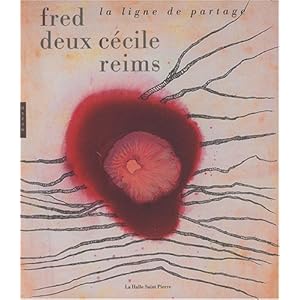
His art reminds somewhat about H.R. Giger but has its own specific style.
I will hopefully write about his art for a journal in Stockholm later on.
This not least as Fred Deux deserves being better known, outside France.
This book gives us an insight into one of the worst mass murderers of all time, Mao Zedong.We are presented a person, not only hungry for power but also loving to see people suffer,
leaving his own family and others behind, using every single person for his own purposes.
Mao was also a perverted person, loving to see his troups torture, rape and humiliate
both women, men, children and elderly people, just because he saw them as
an obstacle for his ambition to become The Great Leader but also Leader of the World!
To this one can add that he was an incredibly coward person, avoiding all confrontation,
hiding himself behind collaborators and his life guard,
being a highly uncharismatic and deeply evil person.
If the Chinese government has the ambition being regarded seriously
It would be of outmost importance to take a stand against this dictator,
his rule and clear up the history by pointing at the terror of Mao:s regime,
declaring this epoch the greatest failure in the history of China.
Unfortunately it seems as if the next Chinese leader is less liberal,
more conservative and nationalistic but the future will tell.
This also goes for the left wing parties in Europe.
If they would like to be taken serioulsy by others than their own voters,
they should publically race their voice and criticize the Mao-era.
They should also question the current leaders as many of them
have been raised and politically trained during this terrible period in Chinese history.
In times when the 'Green Peril' has displaced the 'Read Peril' when it comes to terror,
I recommend people to read this book (unfortunately only written in Swedish as far as I know).
It takes a broad and deep look into the history of Islam and the Arab origin of this world religion.
We get to follow the islamic influence in the history of Europe and we realize that
without Islam or muslims, Europe actually could have been
even more uncivilized than it today de facto is.
The contributions on every level - literature, music, science - are extensive and important.
Can Islam and muslims be said to share most ideas emerging from the Quran
or is the Holy Scripture interpreted differently depending on who you are,
where you live, your upbringing and historical circumstances?
I would say the latter even if both the fundamentalistic islamists
and the opponents to islam - for different reasons - tries to depict the muslim Umma as united.
It displays the strong and independent women at the time when
an almost 'matriarchal' society could have been said existing.
We also get to see how men in reality and throught 'myth-making'
tried to diminish the female influence and power
displaying the women as dangerous and the source of evil.
Not much has changed!
This last book is interesting for all of you who think that meritocracy actually exists.
The author on the contrary displays how you reach a level of incompetence,
often the highest level of your career, more or less because of your incompetence
or the fact that you were competent at lower levels in the hierarchy
but not up to the highest post you've reached, as one confound certain competence with others.
This latter is explained with the facta that one can't allow
a competent person running a company or an organization.
I believe we've often noticed this phenomena.
The author on the contrary displays how you reach a level of incompetence,
often the highest level of your career, more or less because of your incompetence
or the fact that you were competent at lower levels in the hierarchy
but not up to the highest post you've reached, as one confound certain competence with others.
This latter is explained with the facta that one can't allow
a competent person running a company or an organization.
I believe we've often noticed this phenomena.
torsdag, augusti 19, 2010
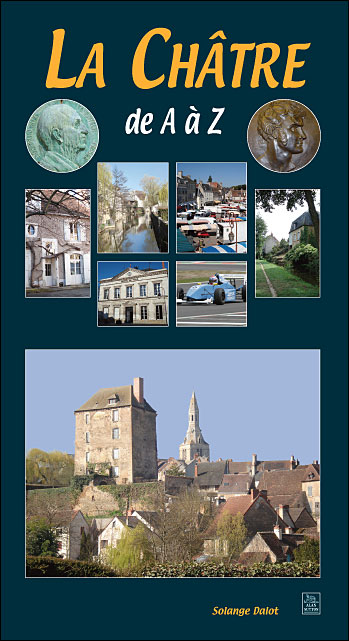
La Châtre de A à Z
As I very much would like to work with promoting the cultural life in La Châtre, Berry and Le Centre - as one call the central parts of France - I've penetrated some books about different aspects of the history of this town.
Earlier I've - among other books - read 'Les racines de George Sand' (below) telling the story about the family roots of George Sand.
It was an interesting book giving me insight into some parts of the French history and the importance some of Sands relatives played in the shaping of France.
Libellés :
Berry,
Books,
Culture,
history,
literature
tisdag, augusti 17, 2010
Franz Kafka Dagböcker/Diaries 1914-1923
Det var längesedan jag skrev något om den litteratur jag läser, det har mer handlat om annat.
Just nu är jag dock i färd med att penetrera Franz Kafkas 'Dagböcker 1914-1923', som i Sverige utgivits på Bakhålls förlag.
Många menar dock att denna den sista delen, skildrande de sista åren av hans liv, är den viktigaste och kanske mest intressanta.
Om detta kan jag inget säga men det är en blandning av väsentligt och oväsentligt, som i alla dagböcker.
Det viktiga är att den dels ger en inblick i personen Kafkas innersta tankar - i den mån en person skriver för sig själv, utgivandes sig själv på ett ärligt sätt eller skriver med tanke på eftervärlden - dels ger en inblick i livet i Prag och övriga städer vid den aktuella tidpunkten.
Där blandas i det yttre samhällsstrukturerna gammalt och nytt, i de inre tankestrukturerna tradition och nytänkande.
Detta gör boken till ett intressant vittnesmål om det liv Kafka, hans vänner och ovänner förde, samhällsutvecklingen och de historiska händelserna i sig, allt självfallet filtrerat via Kakfas subjektiva titthål.
English:
It's long since I wrote anything about the literature I read, I have mostly dealt with other subjects.
Rignt now I'm in the act of reading Franz Kafka's 'Diaries 1914-1923', in Sweden published by the publishing house Bakhåll.
This book constitutes the third part in this publication of Kafka's Diaries and unfortunately I haven't read the two first ones.
Many people say that this third part, depicting the last years of his life, is the most important and maybe also the most interesting of the three.
I have nothing to say about this but it's a mixture of essential and inessential, as in all diaries.
The most important thing is that it partly gives us an insight into the inner thoughts of the person Kafka - insofar as a person writes for him-/herself, exposing him-/herself in an honest way or actually writes for the after world - partly gives us an insight into the life of Prag and other towns at the actual moment.
In this we find a mixture of new and old in the exterior societal structures and tradition and new thinking in the inner pattern of thoughts.
This makes the book an interesting testimony about the life Kafka, his friends and enemies lead, the development of society and historical events per se, everything filtered through the subjective viewport of Kafka himself of course.
(Photo Franz Kafka copied from: http://www.focusdep.com/images/Franz_Kafka_1173256340030717.jpg)
Libellés :
Books,
classics,
literature,
livres
fredag, juni 18, 2010
José Saramago dead
This is an author I discovered when he was awarded the Nobel Prize in Literature in 1998.
I had heard his name before but never read him.
Together with a friend I had begun a project aiming at reading all the œuvres by all the Nobel laureates(!), the works by Saramago became one of my main literary readings that year.
I found him interesting as he's dealing with questions about human behaviour, about courage and lack of it, about personal choices implying going your own way or lack of personal choices - also a way of choosing - about those who are able to see through the surface of what seems to be going on in society and seeing beyond and below the superficial.
All this embedded in a poetic, symbolic language and symbolic actions pointing towards a more truthful or honest interpretation of the world and human behaviour.
The books I've read:
Journey to Portugal (Viagem a Portugal)
Baltasar and Blimunda (Memorial do Convento)
The Year of the Death of Ricardo Reis (O Ano da Morte de Ricardo Reis)
The Stone Raft (A Jangada de Pedra)
The History of the Siege of Lisbon (História do Cerco de Lisboa)
The Gospel according to Jesus Christ (O Evangelho Segundo Jesus Cristo)
Blindness (Ensaio sobre a Cegueira)
All the Names (Todos os Nomes)
The Tale of the Unknown Island (O Conto da Ilha Desconhecida)
The Cave (A Caverna)
Seeing (Ensaio sobre a Lucidez)
Maybe I've read one or two more but these are the ones I remember right now.
I can recommend reading Saramago and one of his most interesting books is The Blindness where - in short - those who see are blind and those who are blind see clearly.
It's much more complicated and poetically expressed in his book of course but why not read it for yourself.
I had heard his name before but never read him.
Together with a friend I had begun a project aiming at reading all the œuvres by all the Nobel laureates(!), the works by Saramago became one of my main literary readings that year.
I found him interesting as he's dealing with questions about human behaviour, about courage and lack of it, about personal choices implying going your own way or lack of personal choices - also a way of choosing - about those who are able to see through the surface of what seems to be going on in society and seeing beyond and below the superficial.
All this embedded in a poetic, symbolic language and symbolic actions pointing towards a more truthful or honest interpretation of the world and human behaviour.
The books I've read:
Journey to Portugal (Viagem a Portugal)
Baltasar and Blimunda (Memorial do Convento)
The Year of the Death of Ricardo Reis (O Ano da Morte de Ricardo Reis)
The Stone Raft (A Jangada de Pedra)
The History of the Siege of Lisbon (História do Cerco de Lisboa)
The Gospel according to Jesus Christ (O Evangelho Segundo Jesus Cristo)
Blindness (Ensaio sobre a Cegueira)
All the Names (Todos os Nomes)
The Tale of the Unknown Island (O Conto da Ilha Desconhecida)
The Cave (A Caverna)
Seeing (Ensaio sobre a Lucidez)
Maybe I've read one or two more but these are the ones I remember right now.
I can recommend reading Saramago and one of his most interesting books is The Blindness where - in short - those who see are blind and those who are blind see clearly.
It's much more complicated and poetically expressed in his book of course but why not read it for yourself.
Libellés :
Books,
Culture,
Deaths,
literature,
livres
torsdag, maj 06, 2010
Le crépuscule d'une idole
In an earlier work by Onfray - Traité d'Athéologie (Treaty of Atheology) - he besets the monotheism, finding it obsolet and more or less unacceptable.
In this book it's the God of psychoanalysis who is being attacked from different angles.
Onfray first establish that Sigmund Freud wanted to build a "science" and secondly that he never achieved his goal.
Freud wanted to prove that the unconsious mind had its laws, its intrinsic logic, expressed in "experimental protocols" but according to Onfray Freud was obliged to lie a little - or a lot? - in order to defend the scientificity of psychoanalysis.
In investigating this theory we need an expert opinion from someone else than Freud and it's Onfray's 'expert opinion' we are being served in this book.
Trying to achieve this goal, Onfray had to study all the major works by Freud and in a television programme in France called La Grande Librarie, I remember him mentioning that he had read some 6000 pages in order to give his opinion.
The conclusion is that the psychoanalysis only stands in a dependancy state to the "ordinary" psychology, the literature and the philosophy and consequently by no means being the "hard facts"-science its founder wanted it to look like.
The ideas put forward by Onfray are not new and Freud has been discussed since the dawn of the days his theories became public but in this case Onfray also puts forward more or less solid proofs demonstrating that a great deal of the, so called, scientific work carried out by Freud was never correctly documented. There exist hidden freudian files who can not be opened before a certain date (2050?) in which the hard facts or the lack of hard facts, will be revealed.
A lot of the work carried out by Freud of course emanated from his own imagination and his own sexual frustration(s) and one should ask oneself how much of his work actually was founded on a more solid scientific-critical approach.
Onfray could of course be accused of not having dealt with his own unconcious or subconcious mind leading him to attack Freud and this could be true in a Freudian sense. On the other hand, this kind of reasoning has always followed fanatics, and those devoted to idolatry, may it be Freud or any other god or semi-god.
This is also often the technique psychologists have used and still use during therapies when a patient starts to questioning their analyses, trying to tell the therapist that they are wrong: "You're just trying to suppress [this or that] side of yourself..." might be an approximate answer from the therapist.
This might be a valid argument for those being convinced of the truth in these theories - as with all fundamentalists - but not valid from a more objective or intersubjective point of view and it's often very degrading for the patient, being confronted with these arguments or pseudo-arguments.
Onfray has taken this kind of reasoning into consideration and in the beginning of the book he refutes these arguments.
Even if we don't have to believe that the theories put forward by Onfray is the truth, the whole truth and nothing but the truth, it seems to be a very interesting and - I believe - beneficial work for both psychoanalysts, patients and others who still seem to think that psychology or psychoanalysis is a strict science with measurable results.
On the contrary, the brain and our mind/psyche is something so complexed that neither psychiatrists, psychologists or the neuroscience ever will be able to exhibit all its intricate functions and effects on our body and psyche/soul, though it seems to be a goal some scientitsts believe they will be able to reach.
Finally I must admit that I haven't read this book - yet - but the things I've written about the book is taken from the presentation of this œuvre in La Grande Librarie in French television the other day.
I wish you a pleasant reading!
(Photo copied from: http://tpprovence.files.wordpress.com/2010/04/aleqm5gbs-udcpmjmamfrgspji_o1qva3g.jpg)
Libellés :
Books,
literature,
livres,
Philosophy Psychology
torsdag, mars 25, 2010
Sture Linnér dead
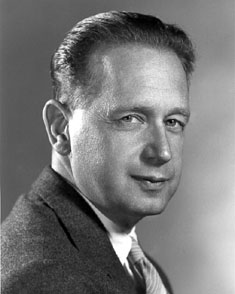
The same day Hammarskjöld toke the aeroplane in order to negotiate cease-fire in Katanga, a break-away state of Congo at the time, he told Linnér - who was with him that day - to stay at the spot from where Hammarskjöld embarked, not going with him. He was needed there according to Hammarskjöld.
This saved Linnér's life.
Dag Hammarskjöld
Besides his diplomatic work, Linnér was also one of the foremost Swedish connoiseurs of Greek culture, professor in the greek language and literature.
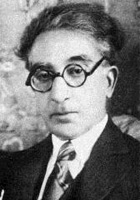
Aurore and I met him in 2008 at the Museum of Mediterranean and Near Eastern Antiquities in Stockholm during an evening around the Greek poet Cavafy and his work.
Cavafi
We were invited by the former executive of the Swedish Institute in Paris, Carl-Henrik Svenstedt.
Carl-Henrik Svenstedt
Aurore and Svenstedt knew each other from a mailing list and when Svenstedt needed someone to translate some parts in a book he had written (from Swedish to French), Aurore helped him with this.
Linnér was one of the speakers that evening.
Sture Linnér
(Photo Sture Linnér during his younger years copied from: https://www.fokus.se/2010/04/sture-linner/)
(Photo Dag Hammarskjöld copied from: http://image1.findagrave.com/photos/2008/17/6074_120072998712.jpg)
(Photo Cavafy copied from: http://img.poemhunter.com/p/96/6796_b_1667.jpg)
(Photo Carl-Henrik Svenstedt copied from: https://svenstedt.wordpress.com/ch-svenstedt-cv/)
(Photo Sture Linnér during his later years copied from: http://sverigesradio.se/diverse/appdata/isidor/images/news_images/2071/267699_366_250.jpg)
torsdag, oktober 08, 2009
Herta Müller
Herta Müller, the Nobel Prize laureate in literature 2009.
She was among the authors mentioned as one of many possible candidates.
I haven't read her but I have to do so now of course. Why of course you ask?
Well of no particular reason more than the lust for reading.
A couple of years ago - it started in 1997 - a friend and I decided to read ALL the literature written by ALL the Nobel Prize laureates, from 1901 and forwards.
This is of course an impossible project but we found it rather stimulating anyway.
We started with Dario Fo where we read all that had been published in Sweden at the time and in fact it was not so much as one might have thought. It caused a lot of laugh anyway, reading the sometime absurd stories of Fo!
Then we continued with José Saramago and there, we found a lot more to read and I did very much enjoy Saramago as a writer. He sometimes writes in 'mysterious ways' and it engage the brain.
The fourth author was one we knew quite well, namely Günter Grass. Not only Die Blechtrommel, a book I also saw transposed into a film by Volker Schlöndorff in 1979, a film I appreciated a lot and I have seen it later too.
Next author to be read was Soul Mountain, One Man's Bible and Buying a Fishing Rod for My Grandfather : Stories
We then continued forwardly but also read some of the older laureates.
We started with Dario Fo where we read all that had been published in Sweden at the time and in fact it was not so much as one might have thought. It caused a lot of laugh anyway, reading the sometime absurd stories of Fo!
Then we continued with José Saramago and there, we found a lot more to read and I did very much enjoy Saramago as a writer. He sometimes writes in 'mysterious ways' and it engage the brain.
The fourth author was one we knew quite well, namely Günter Grass. Not only Die Blechtrommel, a book I also saw transposed into a film by Volker Schlöndorff in 1979, a film I appreciated a lot and I have seen it later too.
Next author to be read was Soul Mountain, One Man's Bible and Buying a Fishing Rod for My Grandfather : Stories
We then continued forwardly but also read some of the older laureates.
Now my wife and I have decided to start reading the Nobel Prize laureate but this time in French.
My mother-in-law is in possession of one book by each and every laureate from 1901 til 1982 (if I remember correctly). We started earlier this summer by reading Sully Prudhomme and Journal Intime.
This time my wife proposed to read the books, not chronologically but chosen by style and she suggested we read the poetical writers:
We will read everyday until the 10th of December.
(Photo of Herta Müller copied from: https://www.larevuedesressources.org/herta-muller-prix-nobel-de-litterature-2009,1349.html)
Libellés :
Books,
Culture,
literature,
private,
Prizes
måndag, mars 03, 2008
Gandhi
In Sweden we now for the first time have a full scale biography about Mahatma Gandhi.
It's written by the author Zac O'Yeah and it's said to be both entertaining and deeply serious in its outlining of the life and work of Gandhi.
It's 60 years since Gandhi died and he seems to be more topical than ever and his work is said to have been carried on by persons like Martin Luther King, Nelson Mandela and Aung San Suu Kyi.
I think though that it's important to face the fact that it's not always a succesful route, using the non-violence method. It depends on in what historical perspective one look at this question.
It's interesting - or rather regrettable - to see that a work of this kind in our mother tongue (Swedish) is presented six decades after the death of a person of such importance as Gandhi.
Why is Sweden always up to date and sometimes ahead of other nations when it comes to technic and inventions but concerning the humanistic topics we are always far behind?
There are historic answers to that but this might come up in another blog comment later on.
I think though that it's important to face the fact that it's not always a succesful route, using the non-violence method. It depends on in what historical perspective one look at this question.
It's interesting - or rather regrettable - to see that a work of this kind in our mother tongue (Swedish) is presented six decades after the death of a person of such importance as Gandhi.
Why is Sweden always up to date and sometimes ahead of other nations when it comes to technic and inventions but concerning the humanistic topics we are always far behind?
There are historic answers to that but this might come up in another blog comment later on.
(Photo Zac O'Yeah by the table copied from: http://varabangalore.files.wordpress.com/2010/03/p1130504.jpg?w=500&h=375)
(Photo cover book copied from: http://www.zacoyeah.com/_/rsrc/1244981598622/Home/books/mahatma/Mahatma.jpg)
söndag, februari 24, 2008
Djävulselixiret/Die Elixiere des Teufels
Har nu avslutat läsningen av Djävulselixiret (Die Elixiere des Teufels) av E.T.A. Hoffman.
Denna bok har varit en del av läsningen som ingår i den lilla 'bokklubb' på Facebook (svenska nätverket) som vi kallar 'Shakespeare & Co', vilket dock inte explicit har med Shakespeare att skaffa.
Boken kan ses som en resa genom den kristna dogmatiken rörande bl.a. läran om arvsynden.
Denna bok har varit en del av läsningen som ingår i den lilla 'bokklubb' på Facebook (svenska nätverket) som vi kallar 'Shakespeare & Co', vilket dock inte explicit har med Shakespeare att skaffa.
Boken kan ses som en resa genom den kristna dogmatiken rörande bl.a. läran om arvsynden.
Dock måste detta ses inte explicit som 'faderns synder' utan den synd som vi alla bär på som emanerar från 'den första människans', Adams, synd.
I denna Adams 'syndiga' handling lades fröet till den synd som vi alla är bärare av och som vi aldrig kan bli av med.
Däremot erbjuder den 'andre Adam', Jesus Kristus (i kristen tradition självfallet) en förlåtelse för den 'skuld' vi bär på för den 'syndiga själ' vi alla är 'kontaminerade' med.
På samma gång finns här ett frö till tanken om den sociala miljöns inverkan på en individ. Uppfostran, det goda exemplet anförs som en motkraft mot arvsyndens fördärvliga inverkan.
Medardus brottas ju hela tiden mot sin 'ondska', sin destruktiva sida och lyckas till slut försonas med sig själv, sitt liv och Gud.
Här finns också offertanken, det ställföreträdande lidandet representerat.
Mot slutet av boken, då Aurelia/Rosalia dör, först då inträder den känsla av försoning hos Medardus som han så länge sökt.
Det krävdes alltså hennes offerdöd, symboliskt framför altaret, för att Medardus skulle nå sin 'frihalsning', sin frälsning från det 'onda'.
Aurelias död skedde också framför altaret men inte på altaret som ett verkligt offerlamm, eftersom den kristna tron endast erkänner existensen av ett specifikt offerlamm som försonat allas våra synder, nämligen Jesus Kristus ('Agnus Dei')
I allt detta finns också tanken om kvinnan som 'fresterskan', precis som i lustgården där Eva frestade Adam med äpplet. Här är det Aurelia som en gång frestat den då förhållandevs fromme Medardus att 'avfalla' från tron och den rätta vägen genom sin kärleksförklaring till honom.
Hoffmann ger här till del Aurelia skulden för Medardus 'syndafall' genom att hon via sin kärleksförklaring i bikten, lockade fram de 'syndfulla' idéer som sedan kom att invadera Medardus tanke- och känsloliv.
Precis som i Lustgården, har här kvinnan som förförare (förförerska)/frestare (fresterska) alltså en framträdande roll.
Här laborerar Hoffmann med en myckenhet av kristet tankegods och dogmatik. Arvsyndsläran, dödssynderna, det ställföreträdande lidandet. Allt detta blandar han samman i en cocktail där vi får följa Medardus på en pilgrimsresa bland törnen, fyllt av motgångar och destruktiva handlingar men samtidigt mötandes individer som bär på 'goda' tendenser, människor vilka försöker locka honom tillbaka till ett liv i kristi efterföljelse - Imitatio Christi idealet - som också är ett tema.
En viss kritik mot kyrka och kloster anser jag mig kunna förmärka samtidigt som Hoffmann vill visa att det bland påstått fromma eller troende finns alla kategorier människor, allt från dem som till synes lever i enlighet med de höga ideal som en kristen eller annan tro innefattar, till dem som lever i en gråzon däremellan och dem som likt Medardus vandrar bort från det goda för att följa sina egoistiska instinkter och endast tillfredsställa sitt behov av njutning. "Det goda som jag vill, det gör jag inte, men det onda som jag inte vill, det gör jag" (Rom. 7:19).
Man skulle kunna säga att idealisten ställs mot libertinen (libertinisten). Här är idealet den kristna trons grundvalar som ställs mot dess raka motsats - så som man ser det i kristen tro - det utsvävande, egoistiska, självförhärligande livet med alla dess nöjen och frestelser. Dock är ju också en libertin en person med ideal men inte kanske just kristna ideal.
I det stora hela är det en intressant idéroman med inslag av det bisarra, det mystika och en hög grad av förväxlingsproblematik om vi ser till de olika i berättelsen invävda figurerna och deras inbördes förhållanden.
Jag kan dock tycka att det finns en hel del unket tankegods som gör att betyget dras ned en aning.
E.T.A. Hoffmann
(Bilden av boken Djävulselixiret kopierat från: https://www.bokborsen.se/view/E-T-A-Hoffmann/Dj%C3%A4vulselixiret-Kapucinermunken-Medardus-Efter/8237867?_p=2&f=1&qs=Geronimo)
(Bilden av E.T.A. Hoffmann kopierad från: https://www.svd.se/skrackmastaren-e-t-a-hoffmann-tidlos-humorist)
Prenumerera på:
Inlägg (Atom)