Visar inlägg med etikett Celebrations. Visa alla inlägg

torsdag, september 29, 2011

Mon anniversaire et mon gâteau!


Le gâteau est une œuvre de notre voisin, Daniel qui est le patron d'un restaurant qui s'appelle 'La Veillée' (2 Rue Ernest Perigois, La Châtre). Il est également pâtissier. Les framboises viennent du jardin de mon beau-père Michel.
Le soir nous avons mangé au restaurant 'L'Escargot' (Place du Docteur Vergne, La Châtre).
Ci-dessous vous voyez l'entrée et le dessert. Malheureusement nous n'avons pas de photos des plats principaux.


tisdag, juli 12, 2011

Собор Василия Блаженного/Saint Basil's Chathedral/Cathédrale Saint-Basile-le-Bienheureux de Moscou 450 years

The Cathedral of the Protection of Most Holy Theotokos on the Moat (Russian: Собор Покрова пресвятой Богородицы, что на Рву), popularly known as Saint Basil's Cathedral (Russian: Собор Василия Блаженного) (or in Swedish Vasilijkatedralen/russian: Собор Василия Блаженного), is a Russian Orthodox church erected on the Red Square in Moscow in 1555–61.
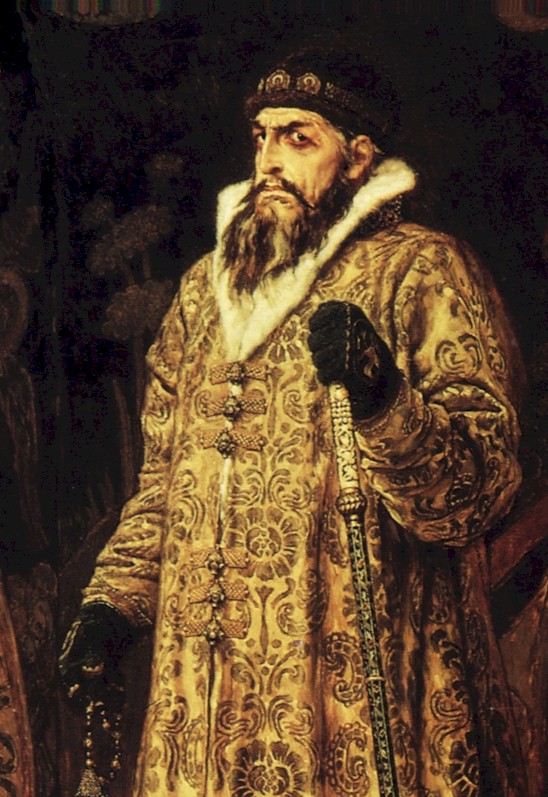
It was built on the order of Ivan IV ('Ivan the Terrible') of Russia to commemorate the capture of Kazan and Astrakhan.
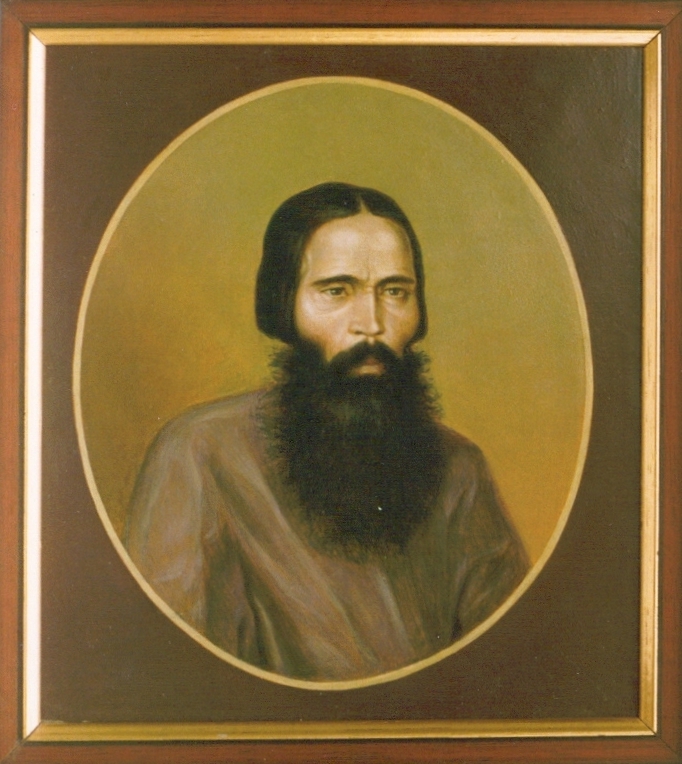
The original building was known as "Trinity Church" and later "Trinity Cathedral" and contained eight side churches arranged around the ninth, central church of Intercession. The tenth church was erected in 1588 over the grave of venerated local saint Vasily (Basil).
In the 16th and the 17th centuries the church, perceived as the earthly symbol of the Heavenly City, was popularly known as the "Jerusalem" and served as an allegory of the Jerusalem Temple in the annual Palm Sunday parade attended by the Patriarch of Moscow and the tsar.


Without going in to details one can say that this cathedral has become a symbol not only for Moscow but for the whole of Russia and as such it's at least as important as the Red Square or Kremlin and to the Christians of course much more important than any of the other buildings.

According to some traditions the architect Postnik Yakovlev was blinded by 'Ivan the Terrible' after finishing this church and this because Ivan didn't want him to be able to create a equally beautiful building again!


(Photo of the St Basil Cathedrale taken from: https://rees.sas.upenn.edu/about/spotlight/saint-basils-cathedral-moscow-russia)
(Picture/painting of Ivan the Terrible copied from: http://www.masterandmargarita.eu/images/02themas/verschrijkkelijke.jpg)
(Picture/painting Saint Vasily/Basil copied from: http://upload.wikimedia.org/wikipedia/en/e/ee/Saint_Vasily.JPG)
(The Jerusalem Temple during Solomo copied from: http://www.arounddeglobe.com/solomon-temple-the-temple-in-jerusalem/)

torsdag, juni 16, 2011

Bloomsday 1904/2011


Bloomsday is the name given to this day by those wanting to commemorate the author James Joyce and particularly his Magnum Opus (some would mention 'Finnegans Wake' perhaps) 'Ulysses' and the character Leopold Bloom in this very book. Leopold Bloom is the protagonist of Ulysses.

The event in this book toke place this very day in Dublin in 1904, or did they?
Bloomsday was 'invented' in 1954.

This is a very intresting book composed by different literary techniques and a kind of mind flow/stream of conciousness-writing, developed throughout the years by Joyce when teaching literature to his students - when not singing, drinking or writing.

Normally I dislike advices like: "The 1000 books you have to read before you die" or the like but in this case I would like to exhort you to read this book as it's a rather groundbreaking œuvre, not least stylistically.


Further reading: The James Joyce Center
Works by James Joyce The Guthenberg Project
Work by or about James Joyce World Cat.org


(Photo 'Ulysses' copied from: https://jamesjoyce.ie/ulysses-2/)

(Photo painting James Joyce by by Jacques-Emile Blanche copied from: https://www.npg.org.uk/collections/search/portrait/mw03533/James-Joyce)

söndag, april 24, 2011

Vasaskeppet/The Vasa Ship


This day, 50 years ago, the royal combat ship Vasa (Vasa ship/museum site) - or the ship that was designed for combat but only succeeded in making 1,3 km in the harbour of Stockholm - was salvaged from the bottom of the sea at the inlet of Stockholm.
There it had been dwelling for 333 years (it sank the 10th of August 1628), almost intact, thanks to the cold water with its special quantities of salt balance.

This ship has become one of the most 'inspected failures' in the world, with more than 1,1, million visitors per year. Only the open air museum Skansen in Stockholm receive more visitors, among the museums in Stockholm.

The ship was built during the reign of Gustav II Adolf (Gustavus Adolphus of Sweden) and was meant to become the finest and greatest war ship in the Swedish Royal Navy and (one of) the most important flagship(s) in Europe.
Vasa was one of the heaviest armed ships in the world at the time and it was designated to be used during the Thirty Year's War. It had 64 canons.

When it sank it had 150 men aboard and more than 30 drowned.

It was forgotten and it was first when the amateur historian Anders Franzén (1918-1993) started looking for it, that it became known to the public. He nourished a dream to salvage the old ship and so he did.
Another important person was Per Edvin Fälting the divers forman, besides all the men and women involved in the practical work.

At first the government and members of the parliament and different institutions, were sceptic towards Franzén's ideas as they saw him as a treasure-hunter but when he succeeded finding sponsors - among them king Gustaf VI Adolf memorial fund - they became more interested. Later on the Wallenberg fund also contributed with money.

It was though after the ship reached the surface that the politicians really understood the potentials of this shipwreck.

tisdag, mars 29, 2011

Gustav III

(Picture taken from: http://danielsundstrom.se/wp-content/uploads/Gustav-III1.jpg)

This day in 1792 the Swedish king Gustav III died from the wounds he got when shot by Jacob Johan Anckarström.

I will not go into the details concerning his death and the history around the conspirators as this is well known data.
What I would like to say is that Sweden, from a cultural point of view, is in need of a person like Gustav III today. This as culture in all its different representations, is seen only as something 'supplementary' to other 'more important' areas in society.
Our politicians today don't understand that culture is the single most important factor for the development and survival of our society(ies).

Of course I'm not in favour of the despotic traits in his person and the fact that he was a dictator and of course he was rewarded prices from institutions he had favoured, almost making him look like one of the foremost artists at the time, something he was not (compare despots as Kim Jong Il and others) but his interest in and promotion of culture in all its prevailing diversity, is something we would need today.
He continued and supported the ideas put forward during the Age of Liberty and thereby founded or promoted institutions as The Royal Swedish Academy of Music, The Royal Swedish Academy of Arts, The Swedish Theatre, The Royal Swedish Opera, The Royal Swedish Ballet, The Swedish Academy, The Royal Swedish Academy of Letters, History and Antiquities.

I know that the interest and support for the culture - as with Louis XIV of France - lead to that the poor was neglected but Sweden of today (and France) can afford both a rich cultural life and support for the weakest in society.
Unfortunately the Swedish governments - whether 'left' or 'right' - neglect both.

The Swedish political leaders today are to nonliterate to realize the importance of culture and the Royal family are concentrating most of their work on the promotion of technique, industry and the more 'classical' export areas in Sweden.
The king is no Gustav III.

This might change when an intellectual person comes to power in Sweden but will this ever happen?

onsdag, februari 02, 2011

Jussi Björling Centennial celebration

Today we (should) celebrate the centennial of one of the greatest lyrical-dramatical tenors of all time, some would even say The Greatest - me for example!

Jussi Björling was born the 5th of February in Borlänge, a small town (almost) in the middle of Sweden but in the Church registers one find the date 2nd of February and Jussi himself always celebrated the latter date as his birthday, and therefore we do the same. Through the link in his name, you are directed to the Swedish Jussi Björlingsällskapet. Through this link, Jussi, you are directed to the American Jussi Björling Society.


Below some pictures of this great tenor.
(Photo taken from: https://greatsingersofthepast.wordpress.com/2017/02/page/2/)


(Photo taken from : https://www.loc.gov/exhibits/opera-portraits-1890-to-1955/operatic-singers-in-formal-clothing.html)


(Photo taken from: https://www.allmusic.com/album/gounod-faust-mw0001403794)

(Photo taken from: https://www.findagrave.com/memorial/11358388/jussi-bj_rling)

(Photo taken from: http://www.operaclubdeparis-mariolanza.fr/ctn/wordpress/2014/05/hommage-au-tenor-jussi-bjorling-sur-radio-aligre-3/)

(Photo taken from: http://didier22.canalblog.com/archives/2019/08/04/37541113.html)

(Photo taken from: https://www.amazon.fr/Jussi-Bj%C3%B6rling-Swedish-Giuseppe-Verdi/dp/B00AOIUHCE)

Jussi Björling - The Centennial Voice


fredag, december 31, 2010

New Year in New Zealand

As always New Zealand starts the celebrations before us in Europe and elsewhere.
A private video:

lördag, februari 09, 2008

Moderna museet 50 years!

Above, the inauguration of The Museum of Modern Art in 1958
The Museum of Modern Art (Moderna museet) in Stockholm this year celebrates its fiftieth anniversary!

It was founded in 1958 by - among others - Pontus Hultén, our foremost and most famous individual inspirer within the world of museums. He was also the first director for or head of the museum between 1960 and 1973.

Above: Pontus Hultén as a young man

It's not an exaggeration to say that he has been the most important person for the international reputation Moderna museet gained during these years.

Unfortunately there is an ongoing discussion within the museum whether or not they have the necessary economical means to complete the work catalogizing his collection of art, a collection donated to the museum after his death.
Above: Pontus Hultén in his "Önskemuseum"
This is rather typical for Sweden I would say. 
We here talk about a person who is the single most important individual for the creation and development of this museum and also the first director of, among other museums, Centre Georges Pompidou in Paris. 
In spite of this one discuss the necessity of completing this important work.
Above: Pontus Hultén in front of what shall become Centre Pompidou

A person working within the museum the other day said to me:

"It's as if the present management looks upon his collection as only 'a lot of work' in a negative way".


If this had been a museum of industrial achievements in Sweden, this discussion would never have taken place. We are unfortunately a technological and technocratic country where the humanities is of very little interest, both to the 'average' Swede, and the politicians - unless it generates money to the state, of course.


I hope - but hardly believe - that this attitude will change!


(Photo of inauguration of the Museum of Modern Art taken from: https://stockholmskallan.stockholm.se/post/1292)
(Photo of Pontus Hultén as a young man taken from: https://www.modernamuseet.se/stockholm/sv/samlingen/forskning/pontus-hulten-och-moderna-museet/)
(Photo of Pontus Hultén in front of the construction work place of Centre Pompidou taken from: https://www.centrepompidou.fr/cpv/ressource.action?param.id=FR_R-8128de60b682b941288dfc615a0ee5&param.idSource=FR_E-f630cb6b47a870fff67fc44ae183796e)
(Photo of Pontus Hultén in his "Önskemuseum" taken from: pontus-hulten-i-utst-onskemuseet-moderna-museet-1963_f_anders-engman_1500x1022-485x330)

söndag, december 31, 2006

New Years Eve: Church, Malmsjö/Tennyson, Cider, 'Dracula'

This video is not from Stockholm but from the Kalmar Castle

Svenska (English below):

Nyårsafton började Aurore och jag med att besöka Oscarskyrkan för en gudstjänst.
Efter detta gick vi till Historiska och Nordiska museerna för att se någon av deras utställningar men båda museerna var stängda.
Vi promenerade på stan och gick in i några butiker, tog oss varsin kaffe och muffins för att därefter åka hem.
Stockholm är tyvärr inte särskilt festligt ens på en nyårsafton.
P.g.a. att vi inte har snö blir mörkret också mörkare eftersom staden inte är särskilt upplyst, som jag tidigare skrivit om.
Aurore stod för matlagningen, som alltid till oss men nu även för vår medboende.
Förrätt bestod av toast med skagenröra,


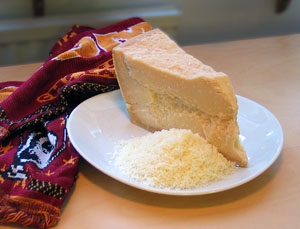
som huvudrätt en purjolökpaj med bechamel och parmesanost.

Som dessert en choklad fondue med frukterna kiwi, apelsin och banan.
Allt mycket gott - i vanlig ordning då hon lagar mat.
Vi lyssnar på musik, läser, tittar/lyssnar på Jan Malmsjö som läser Tennysons 'Nyårsklockan' från Skansen dricker Cider i samband med att vi 'skålar in' det nya året 2007.


Förra årsskiftet firade Aurore och jag själva i Älvsjö med Champagne (Moët et Chandon) och jordgubbar bl.a. Detta år blir det mer spartanskt och mindre festligt, inte minst p.g.a. vår medboende.

Aurore och jag avslutar natten med Francis Ford Coppolas film 'Dracula' med Gary Oldman i huvudrollen och i andra roller Winona Ryder, Anthony Hopkins och Keanu Reeves.


English:

Aurore and I begin New Years Eve with a visit to Oscars church in Stockholm and the service there.
It's a church named after king Oscar II who in 1903, when the church was inaugurated, celebrated 25 years as a regent in Sweden. The church is built in new gothic style.

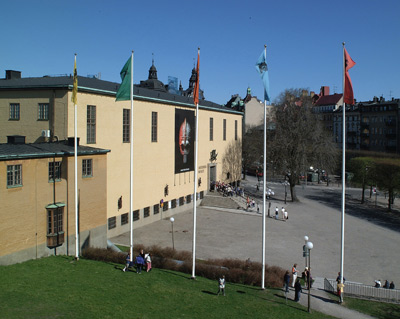
After this we wanted to see one or more exhibitions at either the The Museum of National Antiquities (homepage to the Museum of National Antiquities) or the Nordic Museum (homepage of the Nordic Museum) but both museums were closed.
From the 1st of January the stately museums in Stockholm will again charge a entrance fee after almost two years with free entrances.

We stroll around in city, visit some shops, takes a cup of coffe and queen cake (cup cake) and return home. Aurore starts preparing the food.

She starts with toast and 'skagenröra', continuing with the main course pie with leek, bechamel and parmesancheese.
We conclude with a chocolat fondue and fruits (orange, kiwi, banana).

Instead of Champagne (Moët et Chandon) and strawberries - like last year when Aurore and I celebrated New Years Eve alone - we drink Cider this year, watch the broadcasting from Skansen with the Swedish actor Jan Malmsjö (imdb.com) reading Alfred Tennyson (info on Tennyson) and his poem 'Ring Out, Wild Bells', read every year from the stage at Skansen.

The night ends with 'Dracula', the movie made by Francis Ford Coppola with Gary Oldman, Winona Ryder, Anthony Hopkins and Keanu Reeves among others.


(Foto Skagenröra kopierat från: http://getiton.blogg.se/images/2010/toast-skagen_77181407.jpg)

(Foto purjolökspaj kopierat från: http://www.kokaihop.se/recipe/large/71956-277117.jpg)
(Chokladfondue kopierat från: http://vegoinspira.files.wordpress.com/2009/08/chokladfondue.jpg)
(Foto Jan Malmsjö kopierat från: http://www.expressen.se/polopoly_fs/1.1829930!slot100slotWide75ArticleFull/3447786819.jpg)