Comme promoteur culturel, il est primordial de regarder la culture - dans toutes ses manifestations - comme une des activités humaines les plus essentielles pour la survie et le développement de la société, aux côtés de la nourriture, du logement et des vêtements.
Pourtant, il ne suffit pas de travailler dans la culture pour être un bon promoteur culturel, et il faut que la culture fasse partie intégrante de la vie de celui-ci sous une forme ou une autre, que ce soit dans les sphères de la musique, du cinéma, de la littérature, des arts plastiques, etc.
Parmi les atouts essentiels pour tenir un tel poste, il est donc impératif de posséder une culture générale très étendue.
Bien sûr, il est tout à fait possible de se concentrer sur un unique domaine, comme la danse, la peinture ou le thêâtre p.ex. et d'avoir une maîtrise parfaite de ce sujet mais une connaissance généraliste est préférable dans la mesure où les visiteurs d'un site culturel, touristique ou artistique ont des profils et centres d'intérêts variés. Cela n'empêche bien sûr pas le promoteur d'avoir une connaissance plus approfondie dans un domaine spécifique, mais diversifier ses connaissances reste néanmoins souhaitable.
L'ambition d'un promoteur de culture n'est pas seulement de transmettre sa passion et ses connaissances à autrui sur le lieu où il est en poste mais aussi d'élargir les horizons des visiteurs afin de les aider à découvrir et comprendre l'importance de la culture dans la société, d'un contexte local à des enjeux globaux.
La vision globale qui transperce des frontières locales, régionales et nationales ne doit pas mener la personne à regarder certaines manifestations culturelles de haut en dédaignant certaines expressions de la culture et à priori les classer comme "moins qualitatives" au vu de leur position sur l'échelle culturelle supposée dans une société.
Dans un monde dans lequel la culture, depuis des décennies, est devenue un "divertissement" que l'on devrait simplement consommer, il est vital de souligner que les liens les plus forts et profonds entre les être humains, se créent via une connaissance et une compréhension de "l'autre" par ses expressions socio-culturelles.
Pour réussir à transmettre cette compréhension de la culture, un médiateur culturel doit avoir une personnalité extravertie, se montrer enthousiaste, éloquent et aimer le contact avec le public. En outre, l'animateur culturel devrait maîtriser plusieurs langues, un avantage plus important que jamais.
Si les critères ci-dessus correspondent à votre conception des qualités essentielles chez un promoteur de culture et que vous voulez recruter une telle personne, je suis peut-être la personne que vous cherchez. Pour le savoir, ajoutez-moi à votre réseau sur LinkedIn et envoyez-moi un message pour convenir d'un entretien.
Visar inlägg med etikett Culture. Visa alla inlägg
onsdag, oktober 30, 2019
Les qualités essentielles à un promoteur culturel
Libellés :
Art,
Culture,
exposition,
littérature,
Musique,
Promoteur culturel
onsdag, april 03, 2019
Une petite visite à Amboise - sans le château
J'ai, brièvement, visité la ville d'Amboise aujourd'hui. Quelques clichées...
Oui, il y a, en effet, un théâtre nommé après
Pierre-Augustin Caron de Beaumarchais, l'écrivain, le dramaturge,
le musicien, l'homme d'affaires français du 18ème siècle. (1732-1799) et
Francis Poulenc le compositeur et pianiste français (1899-1963).
Pierre-Augustin Caron de Beaumarchais, l'écrivain, le dramaturge,
le musicien, l'homme d'affaires français du 18ème siècle. (1732-1799) et
Francis Poulenc le compositeur et pianiste français (1899-1963).
...et un cinéma art et essai
(Ci-dessous) J'ai déjeuné ici mais c'était cher !!
Majoritairement des américains/américaines comme clients.
Parce qu'ils peuvent payer ?
torsdag, augusti 19, 2010
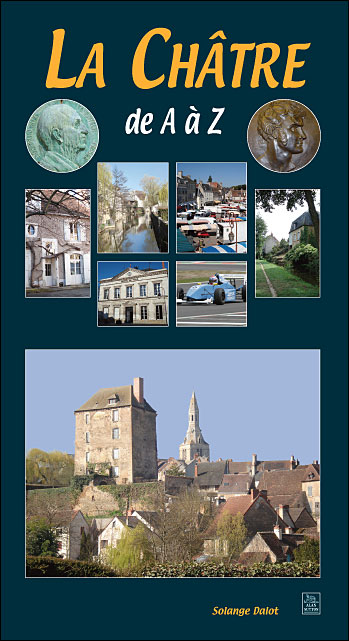
La Châtre de A à Z
As I very much would like to work with promoting the cultural life in La Châtre, Berry and Le Centre - as one call the central parts of France - I've penetrated some books about different aspects of the history of this town.
Earlier I've - among other books - read 'Les racines de George Sand' (below) telling the story about the family roots of George Sand.
It was an interesting book giving me insight into some parts of the French history and the importance some of Sands relatives played in the shaping of France.
Libellés :
Berry,
Books,
Culture,
history,
literature
tisdag, augusti 10, 2010
About Swedish and Scandinavian literature in French
I continue to read the book below about Swedish and Scandinavian literature, written by Régis Boyer.
Rather interesting as there are names in the history of Scandinavian literature that I've forgotten, or maybe authors not so often mentioned today.
I've borrowed this book from my wife, Aurore, who read it before she moved to Sweden in 2004.
Now back in France it's my turn to penetrate it.
Libellés :
Culture,
literature,
Scandinavia
tisdag, augusti 03, 2010
Dracula dans la forteresse de Cluis-Dessous
Briefly about the group: They were founded in 1920 under the name of Société Musicale et Lyrique, changed the name to le Cercle Lyrique before taking the name they now use.
The performance of the evening kept itself very much to the book by Stoker but it also had references to the film by Francis Ford Coppola, who in turn is very loyal to the original book.
The night and all its shadows and the castle ruins, of course created an ambience worthy the content.
No microphones were used wherefore the actors sometimes had to spek out more loudly than the situation demanded, taking in to consideration the content of the story.
On the other hand music interleaved the change of scenes and prerecorded sound was used in a very comic way. E.g. when someone dropped a cup the sound was amplified making it sound as if a whole store of porcelains were knocked about.
On the whole a well staged performance ending at one o'clock in the night.
I apologize for the bad quality of the photos, taken with an iPhone without zoom.


(Photo poster copied from: http://a34.idata.over-blog.com/314x500/2/79/27/64/FINAL-AFFICHE-DRACULA-4.jpg)
fredag, juni 18, 2010
José Saramago dead
This is an author I discovered when he was awarded the Nobel Prize in Literature in 1998.
I had heard his name before but never read him.
Together with a friend I had begun a project aiming at reading all the œuvres by all the Nobel laureates(!), the works by Saramago became one of my main literary readings that year.
I found him interesting as he's dealing with questions about human behaviour, about courage and lack of it, about personal choices implying going your own way or lack of personal choices - also a way of choosing - about those who are able to see through the surface of what seems to be going on in society and seeing beyond and below the superficial.
All this embedded in a poetic, symbolic language and symbolic actions pointing towards a more truthful or honest interpretation of the world and human behaviour.
The books I've read:
Journey to Portugal (Viagem a Portugal)
Baltasar and Blimunda (Memorial do Convento)
The Year of the Death of Ricardo Reis (O Ano da Morte de Ricardo Reis)
The Stone Raft (A Jangada de Pedra)
The History of the Siege of Lisbon (História do Cerco de Lisboa)
The Gospel according to Jesus Christ (O Evangelho Segundo Jesus Cristo)
Blindness (Ensaio sobre a Cegueira)
All the Names (Todos os Nomes)
The Tale of the Unknown Island (O Conto da Ilha Desconhecida)
The Cave (A Caverna)
Seeing (Ensaio sobre a Lucidez)
Maybe I've read one or two more but these are the ones I remember right now.
I can recommend reading Saramago and one of his most interesting books is The Blindness where - in short - those who see are blind and those who are blind see clearly.
It's much more complicated and poetically expressed in his book of course but why not read it for yourself.
I had heard his name before but never read him.
Together with a friend I had begun a project aiming at reading all the œuvres by all the Nobel laureates(!), the works by Saramago became one of my main literary readings that year.
I found him interesting as he's dealing with questions about human behaviour, about courage and lack of it, about personal choices implying going your own way or lack of personal choices - also a way of choosing - about those who are able to see through the surface of what seems to be going on in society and seeing beyond and below the superficial.
All this embedded in a poetic, symbolic language and symbolic actions pointing towards a more truthful or honest interpretation of the world and human behaviour.
The books I've read:
Journey to Portugal (Viagem a Portugal)
Baltasar and Blimunda (Memorial do Convento)
The Year of the Death of Ricardo Reis (O Ano da Morte de Ricardo Reis)
The Stone Raft (A Jangada de Pedra)
The History of the Siege of Lisbon (História do Cerco de Lisboa)
The Gospel according to Jesus Christ (O Evangelho Segundo Jesus Cristo)
Blindness (Ensaio sobre a Cegueira)
All the Names (Todos os Nomes)
The Tale of the Unknown Island (O Conto da Ilha Desconhecida)
The Cave (A Caverna)
Seeing (Ensaio sobre a Lucidez)
Maybe I've read one or two more but these are the ones I remember right now.
I can recommend reading Saramago and one of his most interesting books is The Blindness where - in short - those who see are blind and those who are blind see clearly.
It's much more complicated and poetically expressed in his book of course but why not read it for yourself.
Libellés :
Books,
Culture,
Deaths,
literature,
livres
fredag, maj 07, 2010
Tjajkovskij 170 years old. Eugen Onegin our first opera together
(Some bars from Romeo and Juliet, overture-fantasia after Shakespeare's drama /B-minor/, 1869)
Today we celebrate the birthday of Pyotr Ilyich Tchaikovsky who would have become 170 years old today.
Time flies!
He is perhaps best known for his ballets but as we know he wrote operas, symphonies, concerts for different muscial instruments and more.
Personally he had problems in exepting the fact that he was homosexual or at least bisexual and it's said that his marriage was a disaster.
His parents didn't want him to pursue a career within the muscial domain but he did and became rather succesful, don't you think?
He died in cholera according to some historians while others say it was a suicide.
The first opera Aurore and I saw together was a Tjajkovskij-oeuvre, namely Eugen Onegin (Yevgény Onégin).
It was at the Stockholm Opera House and in one of the roles we had the pleasure listening to the soprano Maria Fontosh.
Time flies!
He is perhaps best known for his ballets but as we know he wrote operas, symphonies, concerts for different muscial instruments and more.
Personally he had problems in exepting the fact that he was homosexual or at least bisexual and it's said that his marriage was a disaster.
His parents didn't want him to pursue a career within the muscial domain but he did and became rather succesful, don't you think?
He died in cholera according to some historians while others say it was a suicide.
The first opera Aurore and I saw together was a Tjajkovskij-oeuvre, namely Eugen Onegin (Yevgény Onégin).
It was at the Stockholm Opera House and in one of the roles we had the pleasure listening to the soprano Maria Fontosh.
(Photo Maria Fontosh copied from: http://www.axess.se/public/upload/images/tv_programs/234.jpg)
torsdag, mars 25, 2010
Sture Linnér dead
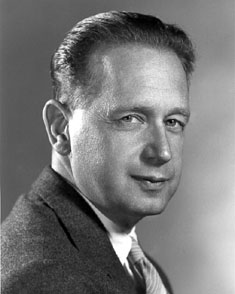
The same day Hammarskjöld toke the aeroplane in order to negotiate cease-fire in Katanga, a break-away state of Congo at the time, he told Linnér - who was with him that day - to stay at the spot from where Hammarskjöld embarked, not going with him. He was needed there according to Hammarskjöld.
This saved Linnér's life.
Dag Hammarskjöld
Besides his diplomatic work, Linnér was also one of the foremost Swedish connoiseurs of Greek culture, professor in the greek language and literature.
Aurore and I met him in 2008 at the Museum of Mediterranean and Near Eastern Antiquities in Stockholm during an evening around the Greek poet Cavafy and his work.
Cavafi
We were invited by the former executive of the Swedish Institute in Paris, Carl-Henrik Svenstedt.
Carl-Henrik Svenstedt
Aurore and Svenstedt knew each other from a mailing list and when Svenstedt needed someone to translate some parts in a book he had written (from Swedish to French), Aurore helped him with this.
Linnér was one of the speakers that evening.
Sture Linnér
(Photo Sture Linnér during his younger years copied from: https://www.fokus.se/2010/04/sture-linner/)
(Photo Dag Hammarskjöld copied from: http://image1.findagrave.com/photos/2008/17/6074_120072998712.jpg)
(Photo Cavafy copied from: http://img.poemhunter.com/p/96/6796_b_1667.jpg)
(Photo Carl-Henrik Svenstedt copied from: https://svenstedt.wordpress.com/ch-svenstedt-cv/)
(Photo Sture Linnér during his later years copied from: http://sverigesradio.se/diverse/appdata/isidor/images/news_images/2071/267699_366_250.jpg)
torsdag, mars 11, 2010
Cinéma Nordique
In Rouen we are going to visit the Nordic Film Festival, Cinéma Nordique, a film festival Aurore visited every year between 2000 and2004.
In Paris we are going to attend the meeting with the Swedish writer John Ajvide Lindqvist (Known for the book Låt den rätte komma in or in English; Let the Right One In/Let Me In or in French; Morse), later adapted for the movies by Tomas Alfredsson.
A couple of exhibitions or at least one at the Cinématheque Française.
We are also going to meet my two first cousins once remowed, both living and working in Paris and having so done for ten respective fifteen years. In spite of them being around 35 years old, I have never met them before!
You can read about this on our joint blog.
(Photo copyright: http://www.theage.com.au/ffximage/2007/03/09/john_narrowweb__300x393,0.jpg)
Libellés :
Culture,
events,
exhibition,
private
måndag, mars 01, 2010
The Birthday of Frédéric Chopin
Aujourd'hui, nous fêtons le 'deuxième' anniversaire de Frédéric Chopin.
Selon son acte de naissance, il était né le 22 février mais selon d'autres sources, le 1 Mars.
Les sources indiquant la date ultérieure, estiment que l'acte de naissance est une falsification, donc nous célébrons Chopin aussi bien le 22 février qu'aujourd'hui !
Today we celebrate the 'second' birthday of Chopin.
Selon son acte de naissance, il était né le 22 février mais selon d'autres sources, le 1 Mars.
Les sources indiquant la date ultérieure, estiment que l'acte de naissance est une falsification, donc nous célébrons Chopin aussi bien le 22 février qu'aujourd'hui !
Today we celebrate the 'second' birthday of Chopin.
According to his birth certificate he was born the 22nd of February but according to other sources the 1st of March.
The latter sources say that his birth certificate is false and therefore we celebrate him both the 22nd of February and today!
(Picture Chopin copied from: https://www.francebleu.fr/infos/culture-loisirs/l-oeuvre-de-chopin-bientot-accessible-gratuitement-sur-internet-1517395019)
Libellés :
Berry,
Culture,
events,
Musik/Music
lördag, februari 27, 2010
César et un Prophète
Ce soir les films et acteurs/actrices français/françaises et étrangers/étrangères ont reçu - ou pas ? - un César pour le meilleur film ou acteur/actrice etc...
Un des gagnants : Un Prophète de Jacques Audiard.
Tonight the films and actors of France and other countries has been rewarded - or not - a César for the best film, best actor, best actress and so forth.
In the category Best Film, the César was rewarded the film by Jacques Audiard:
Un des gagnants : Un Prophète de Jacques Audiard.
Tonight the films and actors of France and other countries has been rewarded - or not - a César for the best film, best actor, best actress and so forth.
In the category Best Film, the César was rewarded the film by Jacques Audiard:
We saw this film in La Châtre (Cinéma Lux) and I must say that even if it was a quite 'ordinary' 'prison film', it wasn't bad at all.
The acting is very good, not least by the main character - Malik El Djebena (Tahar Rahim), the young and promising actor.
Niels Arestrup in the role as César is - as often - very good and he is not Danish at all, or almost at all!
Born in France by Danish parents yes, but when it comes to Danish, he only know one sentence after what I've heard, namely: I Love You ('Jeg elsker dig')
The different problems, possibilities and intriques is depicted in a very realistic and unglamourous way.
torsdag, februari 11, 2010
Alexander McQueen dead
The English fashion designer is dead and according to some sources it was a suicide.
This is perhaps of less interest for those interested in fashion.
Alexander McQueen (Alexander McQueen - official web site) was born in 1969 outside London, son to a taxi driver.
This is perhaps of less interest for those interested in fashion.
Alexander McQueen (Alexander McQueen - official web site) was born in 1969 outside London, son to a taxi driver.
According to different information he early on started to make clothes and notably dresses for his sisters, stating that he had the ambition becoming a fashion designer.
He got an apprenticeship at Savile Row (Savile Row Bespoke) and other fashion centras.
When working at Savile Road he had clients like the former Sovjet leader Mikhail Gorbachev but also Prince Charles.
He later on applied to and got approved for London's most prestigious fashion school Central Saint Martins College of Art and Design (1994).
He received his master and went on to become 'l'enfant terrible' or 'the hooligan of English fashion' because of his reputation of being controversial and somewhat shocking in his style.
He came to Givenchy (succeeding John Galliano) in 1996 before he finally started his own label/brand, becoming very influential, though still somewhat controversial. Later on Gucci bought 50% of his collection (if I remember right) and he continued working in cooperation with them. Puma was another brand for which he created a sports collection.
It was during his time at Givenchy that my wife, Aurore, saw him in Paris in the 8th arrondissement in 1996 or 1997. Personally his name was known to me but I can't say I was to familiar with where he had worked and what he had done and I wouldn't have recognized him in the street.
He came to Givenchy (succeeding John Galliano) in 1996 before he finally started his own label/brand, becoming very influential, though still somewhat controversial. Later on Gucci bought 50% of his collection (if I remember right) and he continued working in cooperation with them. Puma was another brand for which he created a sports collection.
It was during his time at Givenchy that my wife, Aurore, saw him in Paris in the 8th arrondissement in 1996 or 1997. Personally his name was known to me but I can't say I was to familiar with where he had worked and what he had done and I wouldn't have recognized him in the street.
söndag, januari 10, 2010
1810-2010 Frédéric Chopin
This year we are celebrating the bicentennial of the birth of Frédéric Chopin!
I say 'we' as I'm now living in France and he is regarded as a French even if he was born in Poland (1810) and came to live in France in 1830. On the other hand he spent his first twenty years in Poland and Austria and the last nineteen in France, whereby it's quite relevant to call him a naturalized Frenchman.
In the parts where I live - that is to say Région Centre, Berry and notably La Châtre - Chopin is present almost everywhere. This not only connected to the home of the great author George Sand in Nohant but also in names of roads, shops, restaurants etc. alluding to his name.
The bicentennial is observed in other parts of the world too and for more information you can take a look at this site: Chopin 2010.
I say 'we' as I'm now living in France and he is regarded as a French even if he was born in Poland (1810) and came to live in France in 1830. On the other hand he spent his first twenty years in Poland and Austria and the last nineteen in France, whereby it's quite relevant to call him a naturalized Frenchman.
In the parts where I live - that is to say Région Centre, Berry and notably La Châtre - Chopin is present almost everywhere. This not only connected to the home of the great author George Sand in Nohant but also in names of roads, shops, restaurants etc. alluding to his name.
The bicentennial is observed in other parts of the world too and for more information you can take a look at this site: Chopin 2010.
Chopin Concerto Nr. 2 Op 21 Arthur Rubinstein:
In Nohant however - the home of George Sand (one of them and the most important) - there have been a Chopin music festival every year since 1997, called Rencontres Internationales Frédéric Chopin.
2010 is - of course - by no mean an exception and it will surely become an extraordinary festival this very special year!
The festival takes place between 4th and 14th of June and the organizers are Association Musique au Pays de George Sand.
Chopin came to Nohant in 1839 and he there composed two-third of his œuvres and - as many would say - not least some of his very best!
George Sand was - besides a fantastic author, writer of plays and literature critic and so on - a maecenas without whom a lot of writers and musicians, notably Chopin, wouldn't have survived.
Between the 9th and 12th of July there will be a seminar arranged in Nohant and at the same time a ceremony inaugurating a memorial sign, a concert hall and a special site in Nohant bearing the name of Chopin.
For a comprehensive information concerning the events in France, take a look at Chopin2010. Manifestations en France dans le cadre de l'Année Chopin 2010 a l'occasion du bicentenaire de la naissance de Frédéric Chopin.
If you love music and the music of Frédéric Chopin you will find a lot to look at and listen to in France and not least Berry and Nohant!
2010 is - of course - by no mean an exception and it will surely become an extraordinary festival this very special year!
The festival takes place between 4th and 14th of June and the organizers are Association Musique au Pays de George Sand.
Chopin came to Nohant in 1839 and he there composed two-third of his œuvres and - as many would say - not least some of his very best!
George Sand was - besides a fantastic author, writer of plays and literature critic and so on - a maecenas without whom a lot of writers and musicians, notably Chopin, wouldn't have survived.
Between the 9th and 12th of July there will be a seminar arranged in Nohant and at the same time a ceremony inaugurating a memorial sign, a concert hall and a special site in Nohant bearing the name of Chopin.
For a comprehensive information concerning the events in France, take a look at Chopin2010. Manifestations en France dans le cadre de l'Année Chopin 2010 a l'occasion du bicentenaire de la naissance de Frédéric Chopin.
If you love music and the music of Frédéric Chopin you will find a lot to look at and listen to in France and not least Berry and Nohant!
Libellés :
Berry,
Culture,
Musik/Music
måndag, januari 04, 2010
Evgeny Kissin,Esa-Pekka Salonen and Sibelius
Jean Sibelius symphony n:o 5 with Evgeny Kissin at the piano and Esa-Pekka Salonen conducting the youth orchestra.
This is to some extent a very Beethoven-inspired symphony with great bravura and extraordinary fascinating parts of power combined with other more romantic, sensitive passages.
Kissin is a wonderful pianist combining these both above mentioned qualities when playing this piece of music and I think he performed it extraordinarly well.
He has become a bright and shining star on the 'pianistic heaven' the last fifteen-twenty years though he is still rather young (born in 1971)!
Esa-Pekka Salonen is a conductor who has gained a well deserved reputation within many different repertory fields and for the Swedish audience he is of course well known as having been the chief orchestra leader/director of the Swedish Radio Symphony Orchestra (1985-95).
He is, in Sweden, more regarded as a Swedish rather than as the Finnish conductor he actually is. The Swedes have adopted him.
He conducted the UBS Verbier Festival Orchestra, consisted of young musicians, in a piece of music he must know very well and they sounded very good with a surprisingly mature sound.
One have to underline the fact that this festival in Verbier is founded by a Swede, namely Martin T:son Engstroem (if spelled with an oe or an ö, I do not know). He is an artist agent and he has been involved in many artistic projects. This festival he founded in 1994 and he is still in charge.
He conducted the UBS Verbier Festival Orchestra, consisted of young musicians, in a piece of music he must know very well and they sounded very good with a surprisingly mature sound.
One have to underline the fact that this festival in Verbier is founded by a Swede, namely Martin T:son Engstroem (if spelled with an oe or an ö, I do not know). He is an artist agent and he has been involved in many artistic projects. This festival he founded in 1994 and he is still in charge.
The final from Sibelius symphony no 5 with Esa-Pekka Salonen
(not from this concert)
Evgeny Kissin at Verbier Music Festival playing Prokofiev 'Romeo and Juliet'
Prokofiev Romeo and Juliet - Evgeny Kissin -... par medicitv
(Photo Evgeny Kissin copied from: http://operachic.typepad.com/photos/uncategorized/2007/04/21/kissin.jpg)
(Photo Esa-Pekka Salonen copied from:https://www.gramophone.co.uk/classical-music-news/esa-pekka-salonen-to-step-down-from-the-philharmonia)
Libellés :
Culture,
Musik/Music,
Musique
tisdag, december 08, 2009
GRETA La Châtre 1+8/12
What is Greta?
Well it's not a woman from Germany but a group of public educational centers for adults. These educations are complementary to other previous studies and not directed to people who is in need of catching up with school or university studies they previously missed.
The specific education I'm now attending concerns the tourism in the central region of France - Région Centre - (Visa Accueil Tourisme) but also take a wider grip on tourism as a phenomena.
The primary goal is to give the participants good and profound knowledge about Région Centre and its different tourist attractions, cultural heritage and to simplify and ameliorate the welcoming of tourists and all this in order to augment the interest for this region.
As tourism is an essential source of income it's important to take advantage of the great interest people around the world bear for France, its culture, history, food and landscapes.
The knowledge about tourism also implies getting to know some of the habits and traditions in different countries and how people from these countries usually prefer being welcomed.
This includes such things as what they prefer to eat, how they like to be addressed and not least learning some phrases in different languages.
As you know the French are seldom willing to learn nor appreciating speaking other languages but French!
I know that one of the participants at the course objected to this and therefore displayed that he could both speak and read English and even learnt some phrases in Swedish! To be honest there where other participants who also spoke English, some German and Dutch.
Generally however the attitude has been: Either you learn French or you will be lost (somewhat exaggerated).
We got to listen to people talking English, German, Dutch, Spanish, Italian, Russian, Chinese and Japanese and was also given the opportunity to learn some useful phrases in these languages.
France is the leading 'tourist country' in the world with about 78 million visitors every year! This is quite impressing.
I know that one of the participants at the course objected to this and therefore displayed that he could both speak and read English and even learnt some phrases in Swedish! To be honest there where other participants who also spoke English, some German and Dutch.
Generally however the attitude has been: Either you learn French or you will be lost (somewhat exaggerated).
We got to listen to people talking English, German, Dutch, Spanish, Italian, Russian, Chinese and Japanese and was also given the opportunity to learn some useful phrases in these languages.
France is the leading 'tourist country' in the world with about 78 million visitors every year! This is quite impressing.
Most tourists however stay in Paris or near the Alpes or the Mediterranean Sea and this is a pity as other parts of France do offer a lot of interesting sights and events, not least Région Centre!
If you look at our blog (auroregunnar.blogspot.com) you will find a small collection of the many interesting sites to visit in the region.
At first the education was to last three days and three hours each time, but as our teacher couldn't make it the third date, we met for almost six hours the second and last time, 8th of December.
If you look at our blog (auroregunnar.blogspot.com) you will find a small collection of the many interesting sites to visit in the region.
At first the education was to last three days and three hours each time, but as our teacher couldn't make it the third date, we met for almost six hours the second and last time, 8th of December.
This the last meeting also became a formidable feast where each and everyone had brought something to eat and drink! Mon Dieu! This is one of the things I like about France: Food is culture and the participants had brought pies of different kinds, sausages, pâtés, wine and even champagne! This would never happen in Sweden!
We got to learn a lot about the region and we discussed not only the different sites to visit, like castles, churches and events but also talked about music, literature, film and a lot more.
I think this was a very useful education and after finishing the lesson we got our Visa Accueil Tourisme, proving that we had participated in these courses.
We all decided to meet the 8th of January in the home of one of the participants, to eat and drink and conduct further discussions concerning how to promote Région Centre and the different cities and sites in the region.
This education can be supplemented next year if one wants to become a 'tourist ambassador'.
Some information concerning GRETA in French:
Visa Accueil Tourisme: 3 séances pour:
We all decided to meet the 8th of January in the home of one of the participants, to eat and drink and conduct further discussions concerning how to promote Région Centre and the different cities and sites in the region.
This education can be supplemented next year if one wants to become a 'tourist ambassador'.
Some information concerning GRETA in French:
Visa Accueil Tourisme: 3 séances pour:
- Connaître les enjeux du tourisme en Région Centre
- S’impliquer dans l’accueil de touristes étrangers rencontrés sur son territoire
- Connaître les potentiels touristiques de la Région Centre
- Conseiller les touristes étrangers
- Acquérir et pratiquer le vocabulaire de base de l’accueil en langues étrangères.
torsdag, oktober 08, 2009
Herta Müller
Herta Müller, the Nobel Prize laureate in literature 2009.
She was among the authors mentioned as one of many possible candidates.
I haven't read her but I have to do so now of course. Why of course you ask?
Well of no particular reason more than the lust for reading.
A couple of years ago - it started in 1997 - a friend and I decided to read ALL the literature written by ALL the Nobel Prize laureates, from 1901 and forwards.
This is of course an impossible project but we found it rather stimulating anyway.
We started with Dario Fo where we read all that had been published in Sweden at the time and in fact it was not so much as one might have thought. It caused a lot of laugh anyway, reading the sometime absurd stories of Fo!
Then we continued with José Saramago and there, we found a lot more to read and I did very much enjoy Saramago as a writer. He sometimes writes in 'mysterious ways' and it engage the brain.
The fourth author was one we knew quite well, namely Günter Grass. Not only Die Blechtrommel, a book I also saw transposed into a film by Volker Schlöndorff in 1979, a film I appreciated a lot and I have seen it later too.
Next author to be read was Soul Mountain, One Man's Bible and Buying a Fishing Rod for My Grandfather : Stories
We then continued forwardly but also read some of the older laureates.
We started with Dario Fo where we read all that had been published in Sweden at the time and in fact it was not so much as one might have thought. It caused a lot of laugh anyway, reading the sometime absurd stories of Fo!
Then we continued with José Saramago and there, we found a lot more to read and I did very much enjoy Saramago as a writer. He sometimes writes in 'mysterious ways' and it engage the brain.
The fourth author was one we knew quite well, namely Günter Grass. Not only Die Blechtrommel, a book I also saw transposed into a film by Volker Schlöndorff in 1979, a film I appreciated a lot and I have seen it later too.
Next author to be read was Soul Mountain, One Man's Bible and Buying a Fishing Rod for My Grandfather : Stories
We then continued forwardly but also read some of the older laureates.
Now my wife and I have decided to start reading the Nobel Prize laureate but this time in French.
My mother-in-law is in possession of one book by each and every laureate from 1901 til 1982 (if I remember correctly). We started earlier this summer by reading Sully Prudhomme and Journal Intime.
This time my wife proposed to read the books, not chronologically but chosen by style and she suggested we read the poetical writers:
We will read everyday until the 10th of December.
(Photo of Herta Müller copied from: https://www.larevuedesressources.org/herta-muller-prix-nobel-de-litterature-2009,1349.html)
Libellés :
Books,
Culture,
literature,
private,
Prizes
söndag, september 20, 2009
Journées européennes du patrimoine 19-20/9. Château de Bouges
During these two days citizens in the participating countries have the possibility to visit certain buildings like castles, parliamental buildings and other interesting historical sites otherwise not open to the public. There will also be opportunities to discover local traditions within different cultural domains.
In some countries the interest for this event is enormous and France is one of those countries.
The European Day of Patrimony started in France in 1984, initiated by the French Minister for Culture Jack Lang and 49 countries participate by displaying not least buildings but also traditions particular for a specific country, province or region.
1991, several principles were defined within the European Union and these principles were:
- the European Heritage Days should take place during a weekend in September;
- the European Heritage Days allow the general public to visit monuments and sites all over Europe usually closed to the public;
- the buildings that are open all year round can contribute to the programme, providing that they offer special activities, such as guided visits, exhibitions, concerts, lectures;
- the visits should be free of charge or offered at a reduced price;
- the European Heritage Days programme should include the organisation of specific activities that will involve the general public and, in particular, young people and school pupils; all participating countries are asked to use the official name "European Heritage Days". Those countries that set up such initiatives before 1991 under a different name are invited to mention clearly that it takes place "within the framework of the European Heritage Days";
- the logos of the European Heritage Days, the Council of Europe and the European Commission should appear on all European Heritage Days' promotional material; the European Heritage Days' flag should be flown from all buildings open to the public during the event.
We spent Saturday and Sunday in the realm of the 'patrimoine':
Saturday in the former convent Abbaye de Varennes where we talked to the proprietor of the chapel/convent and one of the proprietors of the house and garden, an american painter.
Sunday: Château de Bouges with - among other things - a magnificant garden (80 hectares).
(Picture poster copied from: http://www.exposition-paris.info/wp-content/journee-europeenne-du-patrimoine.jpg)
Libellés :
Culture,
events,
exhibition,
guided tours,
private
måndag, augusti 06, 2007
The Poodle
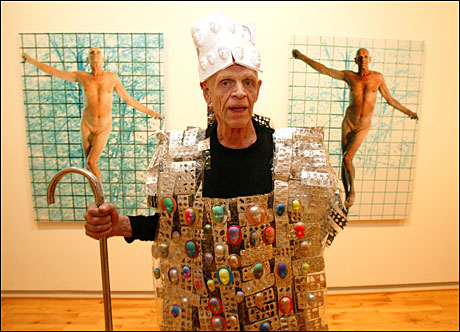
Imorgon (enligt hans hemsida) fyller den norsk-svenske konstnären Kjartan Slettermark 75 år (enligt radion idag 5/8).
Denne provokatör - som han kommit att bli betraktad som - intervjuades i radio häromdagen och berättade där att efter att i Norge (Oslo) ha uppfört ett konstverk som behandlade Vietnamkriget fann han sig tvingad att 'emigrera' till Sverige.
Detta dels efter att någon försökt förstöra hans konstverk med en yxa dels att det senare kom att bli förstört genom 'stening'.
Det främsta skälet var dock att han själv kom att bli utsatt för så pass häftig kritik från olika representanter för det norska officiella samhällsetablissemanget och allmänheten, att han inte kände att han kunde verka i Norge mer.
I Sverige kom han bl.a. att ägna sig åt undervisning men blev vid en skola avskedad eftersom han inte kunde acceptera det utvärderingssystem som användes då det gällde att bedöma elevernas kunskapsnivåer och kvaliteter som konstnärer.
Efter ett antal utställningar och performances blev han av en psykiatriker diagnosticerad 'psykiskt sjuk' med borderline-karaktäristiska drag. Han fick Hibernal (starkt psykofarmaka) utskrivet men vägrade ta det. Läkarna ville t.o.m. lägga in honom på en psykiatrisk avdelning för vård.
Efter detta begärde han 'politisk asyl' på Moderna museet.
Hans första uppmärksammade 'Pudelföreställning' skedde på Liljevalchs vårutställning 1975.
Numera finns ju denna pudeldräkt att se i Moderna museets permanenta utställningar.
Ett händelsrikt liv med många strider och motgångar men även succéer i olika konstnärliga sammanhang. Se mer om honom via länken vid hans namn ovan som leder direkt till hemsidan.
The Norwegian-Swedish artist Kjartan Slettermark tomorrow (according to his homepage) celebrates his 75th birthday (today according to Swedish radio).
This provocateur (as he has been regarded) was interviewed in Swedish radio the other day and he told the reporter that after the work about the Vietnam war, a work displayed in Oslo, Norway, he found himself forced to 'emigrate' to Sweden.
This partly because someone had tried to destroy it with an axe, partly because someone succeeded in destroying it by throwing stones at it. The prime reason though was that he became heavily criticized by the official Norway as well as by the general public and this made him unable to continue to work in his native country.
In Sweden he taught art but was dismissed because he refused using the evaluation system the school had initiated in order to assess the standard of attainment and the quality of the works of the students.
After a series of exhibitions and performances in Sweden he became diagnosed as 'mentally ill' with borderline charasteristics by a psychiatrist. He was prescribed Hibernal (a strong psychotropic drug) but refused to take it. The doctors even wanted to take him in to hospital for treatment.
After this he applied for 'political asylum' at the Museum of Modern Art in Stockholm (Moderna museet). He wanted to move in there.
His first 'Poodle performance' that attracted attention toke place at the Liljevalchs art gallery, Stockholm, in 1975. Nowadays one can see this poodle costume as a part of the permanent exhibition at Moderna museet in Stockholm.
He has lived an eventful life with many conflicts, setbacks but also great success in different artistic contexts.
See more about him through the link above connected to his name.
(Photo Kjartan Slettemark at the top copied from: http://gfx2.aftonbladet-cdn.se/image/11733966/480/normal/4b9b7afd24fc0/Kjartan+Slettemark)
(Photo 'The Poodle' copied from: http://www.fineart.no/edoc/campaign_img/IMAGE_83-4.JPG)(Photo Kjartan Slettemark at the bottom of the page copied from: http://static.vg.no/uploaded/image/bilderigg/2008/12/13/1229199828315_546.jpg)
Prenumerera på:
Inlägg (Atom)