Visar inlägg med etikett Sweden. Visa alla inlägg

lördag, april 23, 2011

Annalisa Ericson död


Annalisa Ericson was a Swedish actress and dancer, participating in both light comedies as well as more dramatic roles.
She started off as a ballet dancer at a very young age but later on continued to educate herself to become an actress, first and foremost at theatres and in reviews but later on in films.

One of her most famous roles was that in the film 'Blåjackor' (or 'Sailors'), originally an operetta (light opera), where she danced with the actor Nils Poppe in some of the most famous dance scenes in Swedish cinema. Sometimes they were referred to as the Fred Astaire and Ginger Rogers of Swedish film.

tisdag, mars 29, 2011

Gustav III

(Picture taken from: http://danielsundstrom.se/wp-content/uploads/Gustav-III1.jpg)

This day in 1792 the Swedish king Gustav III died from the wounds he got when shot by Jacob Johan Anckarström.

I will not go into the details concerning his death and the history around the conspirators as this is well known data.
What I would like to say is that Sweden, from a cultural point of view, is in need of a person like Gustav III today. This as culture in all its different representations, is seen only as something 'supplementary' to other 'more important' areas in society.
Our politicians today don't understand that culture is the single most important factor for the development and survival of our society(ies).

Of course I'm not in favour of the despotic traits in his person and the fact that he was a dictator and of course he was rewarded prices from institutions he had favoured, almost making him look like one of the foremost artists at the time, something he was not (compare despots as Kim Jong Il and others) but his interest in and promotion of culture in all its prevailing diversity, is something we would need today.
He continued and supported the ideas put forward during the Age of Liberty and thereby founded or promoted institutions as The Royal Swedish Academy of Music, The Royal Swedish Academy of Arts, The Swedish Theatre, The Royal Swedish Opera, The Royal Swedish Ballet, The Swedish Academy, The Royal Swedish Academy of Letters, History and Antiquities.

I know that the interest and support for the culture - as with Louis XIV of France - lead to that the poor was neglected but Sweden of today (and France) can afford both a rich cultural life and support for the weakest in society.
Unfortunately the Swedish governments - whether 'left' or 'right' - neglect both.

The Swedish political leaders today are to nonliterate to realize the importance of culture and the Royal family are concentrating most of their work on the promotion of technique, industry and the more 'classical' export areas in Sweden.
The king is no Gustav III.

This might change when an intellectual person comes to power in Sweden but will this ever happen?

lördag, juni 19, 2010

Bernadotte 1810-2010

This year there is another bicentennial concerning mostly Sweden but to some extent also France, namely the 200 years of the Bernadotte dynasty on the throne.

I'm not going to write an extensive historic review because this is of course not my domaine but for those not knowing much about Sweden and the royal family this can be said:

The French revolution in 1789 put an end to the class society, earlier being the most common societal structure both in France and Sweden.
This meant that people from 'lower classes' were given career opportunities and this made it possible for a person like Jean-Baptiste Bernadotte, the son of a small town lawyer, to rise in the ranks within the military.

He became one of the foremost marshals of France and a close ally to Napoléon and on the same time somewhat of a rival.

He is said to have had bigger ambitions than this and among his friends and allies there were those who in him saw the new emperor after Napoléon Bonaparte.

However Bernadotte had powerful enemies, namely Klemens von Metternich and Charles Maurice de Talleyrand! They opposed the idea of having a parvenu as emperor of France.

Napoléon appointed him Prince of Ponte Corvo in 1806 but this didn't please neither him nor the people of Ponte Corvo, so it seems.

The Swedish military Carl Otto Mörner knew about this formidable marshal Bernadotte and decided to - as we would say today perhaps - headhunt him in order to become the king of Sweden.
Why?

In Sweden king Gustav IV Adolf had been suspended in 1809 and his uncle Karl XIII was appointed king. He was however 61 years old and had no children. This made the questions about the throne aire somewhat 'delicate'.
In the autumn 1809 Karl XIII had a stroke and became more or less unable to govern the country.
The Swedish Parliament chose for crown prince the Danish prince Kristian August and he arrived early in 1810, taking the name Karl August and was adopted by Karl XIII.

He adapted very quickly and became very popular but unfortunately he also had a stroke during a military manouevre and died!
Fredrik Kristian of Augustenborg - brother-in-law to the Danish king Fredrik VI - now became the foremost candidate to become the succesor on the Swedish throne.

It's however at this point that the Swedish lieutenant Carl Otto Mörner started making plans, in order to get a French marshal on the throne.

Mörner was in Paris as a courier for the Swedish government and his prime mission was to obtain approval from Napoléon to the coronation of Fredrik Kristian of Augustenborg.
Napoléon did however mention another person, namely count Bonde, an heir to earlier kings in Sweden. Maybe he would be suitable as king of Sweden, the emperor suggested.

Mörner didn't settle for this. Instead he started inquiring among a number of French marshals in order to find out if they would like to become the king of Sweden.
General Jean-Baptiste Bernadotte displayed great enthusiasm but when Mörner came back to Sweden Karl XIII was displeased with his mission and he wasn't allowed to participate in the Swedish Parliament. He was even put in house arrest.

Meantime Bernadotte got the approval by Napoléon but at the same time one had decided making Fredrik Kristian of Augustenborg the king of Sweden.

A French vice consul by the name of Fournier came to Sweden and began, what we would call, a PR campaign, promoting Jean-Baptiste Bernadotte and the 21st of August 1810, Bernadotte was chosen to be crown prince, on one condition:
He had to convert and accept the Evangelical-Lutheran confession, the official religion of Sweden then as now.

So he did and the rest is history as one say.

This year Sweden is celebrating this event but also the wedding of the Crown Princess Victoria, marrying Daniel Westling.
This wedding took place today the 19th of June, the same date as the marriage between her father and mother king Carl Gustaf (Carl XVI Gustaf) and queen Silvia (Sommerlath) in 1976.

For the 'French connection' it's perhaps important to note that Jean-Baptiste Bernadotte was born in Pau in France.

Trivia: Crown Princess Victoria is born the 14th of July, the National Day of France!
Trivia: Jean Baptiste Bernadotte is said to have had a tatoo on his body where one could read:
"Mort aux rois", that is to say: "Death to the kings".


(Painting Jean-Baptiste Bernadotte copied from: http://www.consulat-suede.fr/news_img/Bernadotte.jpg)

(Photo king Carl XVI Gustaf copied from: http://www.angeloplessas.com/blog/uploaded_images/king_carl_xvi_gustaf_1146407355-773986.jpg)

onsdag, februari 28, 2007

Sleet, Carl Bildt and Bertil Torekull

Svenska (English below):

Det slaskiga vädret fortsätter i Stockholm och skall så göra ett par dagar.
Är det nu mildare väder på ingång igen eller är det endast temporärt?

Den kände journalisten Bertil Torekull kritiserar utrikesminister Carl Bildt för att denne på sin blogg försvarar sig mot den kritik som riktats mot honom p.g.a. sitt engagemang i olika företag samt aktieinnehav i dessa.

Bertil Torekull

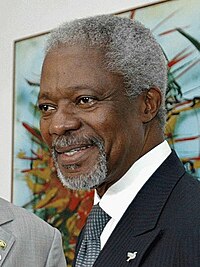
Det gäller bl.a. Lundin Oil, ett svenskt oljeföretag som i sitt arbete med att finna olja i Sudan, sägs ha använt sig av oetiska metoder och brutit mot av F.N. och Kofi Annan upprättade etiska regler.
Kofi Annan

Till detta kommer att Bildt också kritiseras för att ha engagerat sig i en lobbygrupp vilken arbetade för störtandet av Sadaam Hussein.

Torekull jämför Bildt med Hugo Chavez i Venezuela och menar att Bildt ohotat på sin blogg raljerar med och kritiserar medier för deras bevakning av honom.
Detta utan att medierna ges möjlighet kommentera detta då Bildt själv avgör vad och vem han vill ha kommentarer kring och av.

Torekull glömmer dock att när det gäller den 'tredje statsmakten' - medierna - har de i alla tider kunnat välja vilka personer de anser skall ha tillgång till åsiktsutrymmet.
För mig som medborgare är det exempelvis nästintill omöjligt ges möjlighet debattera dagsaktuella frågeställningar på exempelvis Dagens Nyheters debattsida.
Den är avsedd för redan etablerade debattörer.

Någon gång i slutet av 80- eller om det var början av 90-talet förde jag ett samtal med redaktören för debattsidan på Dagens Nyheter.
Jag tog just upp frågan kring varför endast de redan etalberade, välkända debattörerna figurerade på tidningens debattsida. Detta motiverades dels med att en känd debattör väcker störrre uppmärksamhet - vilket i och för sig kan vara korrekt - dels med att kända, offentliga personer i större utsträckning än 'amatörtyckarna' besatt kunskap och förmåga att uttrycka sig genomtänkt, initierat och nyanserat.
Det sistnämnda påståendet fann jag vara rent struntprat.

Efter att i ett par-tre decennier följt de olika debatterna på tidningarnas ledar- och debattsidor, kan jag konstatera att kvaliteten i det som skrivs, både stilistiskt och innehållsligt varierar kraftigt.
Det finns stora brister hos många debattörer i dessa båda avseenden.

I andra fall kan man på tidningarnas insändarsidor eller i radion avhöra samtal och diskussioner där 'vanliga', icke professionella medborgare/debattörer visar prov på stor kunskap och insikt i komplicerade frågeställningar.
Dessutom kan de många gånger förmedla den på ett synnerligen intressant och tankeväckande sätt.
Detta utan att vara etablerade samhällsdebattörer i ett större samhälleligt sammanhang.

Låt Bildt och andra ledande politiker och beslutsfattare fortsätta debattera i andra fora än radio, tidningar och tv.
Detta står inte i vägen för en seriös granskning av personernas ifråga politiska, yrkesmässiga roll.

Torekull har själv tillhört och tillhör fortfarande en maktelit inom mediavärlden där han under ett antal decennier innehaft ett flertal tunga positioner inom mediasfären.
I denna sin yrkesroll har han inte alltid varit åtkomlig för kritik från medborgarnas sida på de debattsidor eller i de radio- och tv-sammanhang där han medverkat.
Skillnaden mellan honom och Bildt är inte så stor som man i förstone kan förledas tro.

Torekull skulle kunna invända att han själv inte innehar en offentlig position av den dignitet som Bildt har eller har haft där sistnämnda skall företräda regeringens åsikter i olika frågor och detta är i och för sig korrekt.
Däremot menar jag att vi kanske kan se framför oss en förändring i synen på politikerns roll i samhällsdebatten där en större transparens skall vara målet.
Detta i motsats till vad Torekull gör gällande då han menar att det endast är genom de etablerade mer traditionella medierna som vi kan få en korrekt belysning av en politikers göranden och låtanden i olika sammanhang.

Personligen tror jag detta är en obsolet tankegång, vilken kanske till del präglar en äldre tids syn på det offentliga rummet och dess olika åsikts- och debattfora.

English:

The sleet continues. The snow is melting away to some degree but not fast enough if you ask me.
Is the mild weather on its way in or is it just temporary? If you have the answer, please let me know.
But only if the answer is that warm and sunny weather is approaching.

A famous journalist and publicist, Bertil Torekull, is critizising the Minister of Foreign Affairs, Carl Bildt, for him using his own blog to comment on and criticize media and their work.

Bildt has been heavily critizised for beeing a shareholder in different companies, for example the Swedish oil company Lundin Oil, a company said to have been using unethical methods in their effort to find oil in Sudan. The critic is partly due to the fact that the opposition and some journalists fear that Carl Bildt might be biased when it comes to decisions concerning issues related to these companies and that it would make him disqualified as a decision maker.

Bildt is now taking the opportunity to attack the media and is said to have mocked some journalists and their journalistic work.
Hugo Chavez

Torekull compares Bildt with Hugo Chavez in Venezuela and his way of dealing with the media where the latter more or less unthreatened uses different channels to write and say whatever he likes concerning the media and other people in society who opposes him.


I think the comparison is a bit dramatic and that is probably the intention from Torekull's side.

I hardly think that Chavez accepts the same review of his work as a politician like Bildt and others in the West have to subject themselves to.
Of course the investigation of the politicians and their work could improve in our country too but I still think it's easier to criticize our politicians without risking severe consequences like in Chavez' Venezuela?
Correct me if I am wrong.

Torekull is part of an older generation and I think he has not yet excepted the changing platforms for 'public speach'.

On the other hand Torekull has for decades been one of the most influential journalists in our country and as a citizen it has not been easy critizising him or the newspapers where he has worked when they have published articles on different subjects.

On the debate pages in the newspapers there has always been professional or established debaters who have been given the opportunity to put forward their views on different issues.

Many years ago I debated this issue with the editor of the debate pages in our biggest morning paper, Dagens Nyheter (Daily News).
I asked him why there were only established and well known politicians and official persons who got access to this page. He answered that they generally where more competent in putting forward their opinions on different issues and that they hade thought things over in a more thorough way than the 'ordinary' citizen.
I did not agree with him.

I have been reading these pages for many years (three decades) and I can't find that the standard of the contributions to the debates always can be said to reach higher levels than some of the debates among 'ordinary' people as seen in letters to the editor columns or during debates in radio or tv.

Let us create more opportunities for people, both official representatives and others, to express themselves. The ordinary press may have to accept being reduced from the throne as the 'third power of state'?

I think Torekull is a representative of an older generation and their view on press, freedom of speach and opinion and ideas concerning who is going to control these tools.
He suggests that it's only through the traditional papers and their journalists that we can get correct information concerning politicians and other officials in society.
I think he is wrong.


(Foto Bertil Torekull kopierat från: http://www.expressen.se/polopoly_fs/1.1941368!slot50ArticleSmall/3447786819.jpg)

(Photo Kofi Annan copied from: http://upload.wikimedia.org/wikipedia/commons/thumb/1/1a/Kofi_Annan.jpg/200px-Kofi_Annan.jpg)
(Photo Hugo Chavez copied from: http://upload.wikimedia.org/wikipedia/commons/thumb/3/3b/Hugo_Chavez_photo_cut_27-06-2008.jpg/250px-Hugo_Chavez_photo_cut_27-06-2008.jpg)