 Fred Deux is a local artist, living in La Châtre.
His art reminds somewhat about H.R. Giger but has its own specific style.
I will hopefully write about his art for a journal in Stockholm later on.
This not least as Fred Deux deserves being better known, outside France.
 This book gives us an insight into one of the worst mass murderers of all time, Mao Zedong.
We are presented a person, not only hungry for power but also loving to see people suffer,
leaving his own family and others behind, using every single person for his own purposes.
Mao was also a perverted person, loving to see his troups torture, rape and humiliate
both women, men, children and elderly people, just because he saw them as
an obstacle for his ambition to become The Great Leader but also Leader of the World!
To this one can add that he was an incredibly coward person, avoiding all confrontation,
hiding himself behind collaborators and his life guard,
being a highly uncharismatic and deeply evil person.
If the Chinese government has the ambition being regarded seriously
It would be of outmost importance to take a stand against this dictator,
his rule and clear up the history by pointing at the terror of Mao:s regime,
declaring this epoch the greatest failure in the history of China.
Unfortunately it seems as if the next Chinese leader is less liberal,
more conservative and nationalistic but the future will tell.
This also goes for the left wing parties in Europe.
If they would like to be taken serioulsy by others than their own voters,
they should publically race their voice and criticize the Mao-era.
They should also question the current leaders as many of them
have been raised and politically trained during this terrible period in Chinese history.

In times when the 'Green Peril' has displaced the 'Read Peril' when it comes to terror,
I recommend people to read this book (unfortunately only written in Swedish as far as I know).
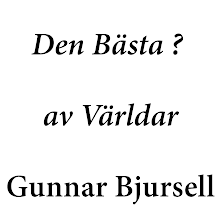
It takes a broad and deep look into the history of Islam and the Arab origin of this world religion.
We get to follow the islamic influence in the history of Europe and we realize that
without Islam or muslims, Europe actually could have been
even more uncivilized than it today de facto is.
The contributions on every level - literature, music, science - are extensive and important.
Can Islam and muslims be said to share most ideas emerging from the Quran
or is the Holy Scripture interpreted differently depending on who you are,
where you live, your upbringing and historical circumstances?
I would say the latter even if both the fundamentalistic islamists
and the opponents to islam - for different reasons - tries to depict the muslim Umma as united.
 This is an interesting book about the history of the Celtic women.
It displays the strong and independent women at the time when
an almost 'matriarchal' society could have been said existing.
We also get to see how men in reality and throught 'myth-making'
tried to diminish the female influence and power
displaying the women as dangerous and the source of evil.
Not much has changed!

This last book is interesting for all of you who think that meritocracy actually exists.
The author on the contrary displays how you reach a level of incompetence,
often the highest level of your career, more or less because of your incompetence
or the fact that you were competent at lower levels in the hierarchy
but not up to the highest post you've reached, as one confound certain competence with others.
This latter is explained with the facta that one can't allow
a competent person running a company or an organization.
I believe we've often noticed this phenomena.
The author on the contrary displays how you reach a level of incompetence,
often the highest level of your career, more or less because of your incompetence
or the fact that you were competent at lower levels in the hierarchy
but not up to the highest post you've reached, as one confound certain competence with others.
This latter is explained with the facta that one can't allow
a competent person running a company or an organization.
I believe we've often noticed this phenomena.